Total Hip Arthroplasty — Complete Exercise Program
Looking for a shorter starting point? The Total Hip Arthroplasty starter guide covers the first 8 exercises on a printable sheet.
A phase-by-phase exercise program used in recovery for total hip arthroplasty. Each movement includes what it's working on and how it's typically performed. Your own surgeon's or therapist's guidance always comes first.
Before surgery
Low-Impact Conditioning
Easy on the joints, builds the endurance that speeds recovery.
What it helps: Keeps your heart and muscles working with activities that stay gentle on the joints — fitness without the pounding.
- Pick a comfortable activity: walking, stationary bike, cycling, elliptical, swimming, or rowing.
- Warm up 10-15 minutes before your exercises.
- Build toward 20-30 minutes as you're able.
Tips:
- Choose what you enjoy — consistency matters more than intensity.
Commonly done most days.
Walking Program
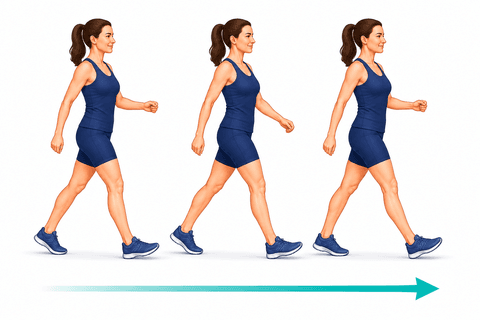
Short, frequent walks build endurance and confidence.
What it helps: Comfortable, frequent walking keeps the joints loose, builds your stamina, and rebuilds confidence on your feet. Little and often beats long and tiring.
- Take short walks at a comfortable pace.
- Increase your distance gradually as you feel able.
Tips:
- Use your assistive device as directed.
Commonly done throughout the day.
Ankle Pumps
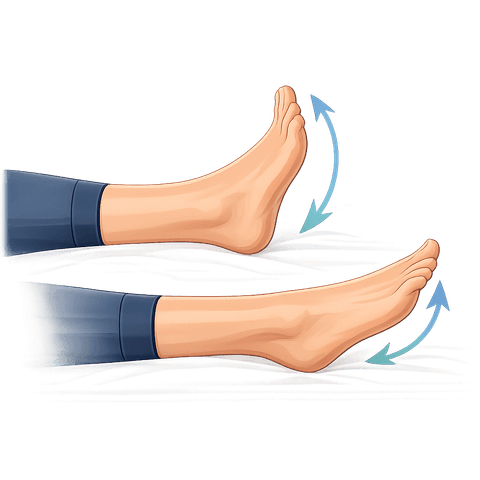
Improves circulation and helps reduce swelling.
What it helps: Keeps blood moving to reduce swelling and the risk of clots while you're less active — small, frequent, and important early on.
- Flex your foot up, pointing your toes toward the ceiling.
- Point your toes down, away from your body.
Tips:
- Move slowly and with control.
Commonly done as 20 repetitions, several times a day.
Glute Squeezes
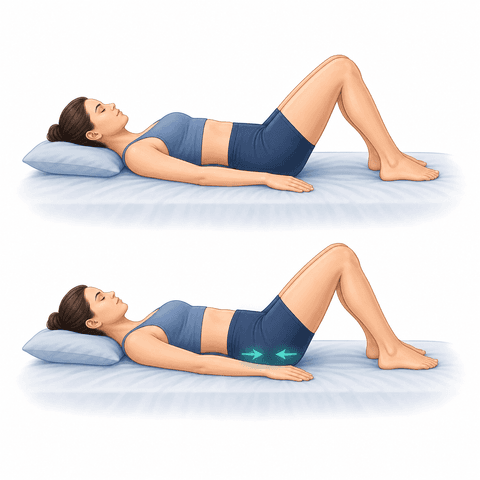
Gently re-engages the buttock muscles.
What it helps: Wakes up the glutes — the big muscles that steady and support your hip. Getting them firing again is the first step toward a hip that feels stronger and carries you with less strain on the joint.
- Lie or sit comfortably.
- Squeeze your buttock muscles together.
- Hold a few seconds, then relax.
Commonly done as 2-3 sets of 10, a few times a day.
Standing IT Band Stretch

Stretches the outer hip and thigh.
What it helps: Eases tightness through the outer hip and thigh that can tug on the hip and knee.
- Stand next to a wall for support.
- Cross the leg nearest the wall behind the other.
- Lean your hip toward the wall until you feel a stretch on the outside of the hip.
- Hold, then relax.
Tips:
- Hold about 30 seconds; repeat a few times.
Commonly done as 4 repetitions, daily.
Knee to Chest
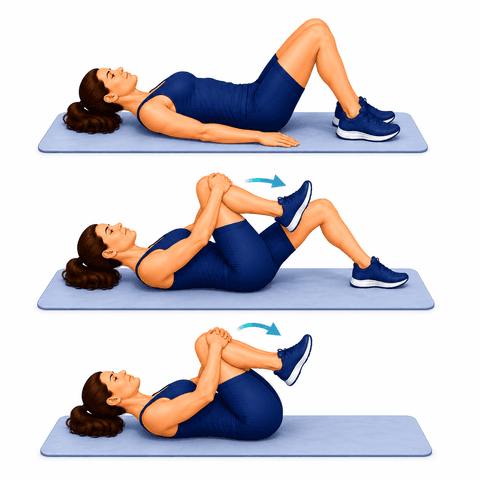
Stretches the hip and lower back.
What it helps: A gentle stretch that eases tension across the hip and lower back.
- Lie on your back with your legs extended.
- Bend one knee and gently pull it toward your chest.
- Hold, then relax and switch sides.
Tips:
- Hold about 30 seconds each side.
Commonly done as 4 repetitions, daily.
Hamstring Stretch
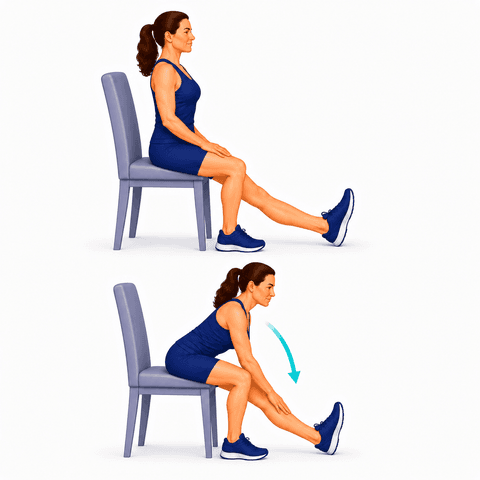
Keeps the back of the thigh flexible.
What it helps: Keeps the back of the thigh flexible so the knee moves freely and your stride stays comfortable.
- Lie on your back, or sit with the leg extended.
- Gently bring the straight leg toward you until you feel a stretch behind the thigh.
- Hold, then relax.
Tips:
- A towel looped around the thigh can help. Hold 20-30 seconds.
Commonly done as 4-5 repetitions, daily.
Standing Hip Abduction
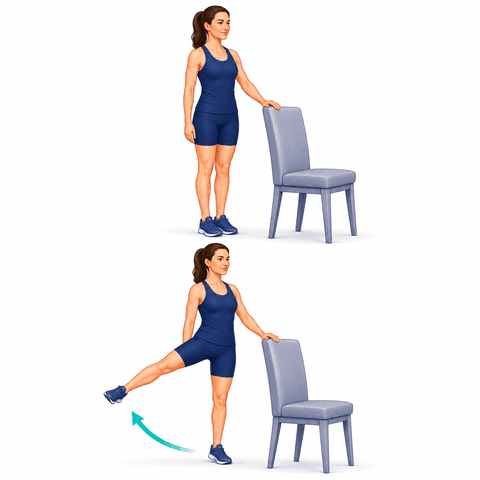
Strengthens the muscles on the side of the hip.
What it helps: Strengthens the outer-hip muscles that hold you steady whenever you're on one leg — which is every step you take. Stronger here, steadier hip.
- Stand holding a counter for support.
- Lift your leg out to the side, keeping it straight.
- Lower slowly.
Tips:
- Keep your toes pointing forward.
Commonly done as 2-3 sets of 10-15, 1-2x daily.
Biceps Curls (Upper Body)
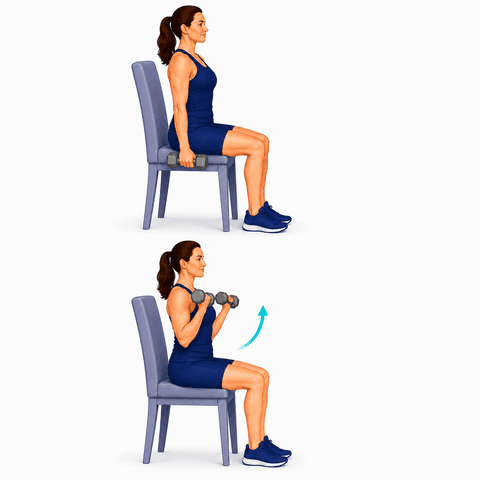
Builds the arm strength you'll use for a walker or crutches after surgery.
What it helps: Builds the arm strength you rely on for lifting and carrying — and for managing crutches or a walker.
- Sit tall or stand with your elbow close to your side.
- Bend your elbow, bringing your hand toward your shoulder.
- Lower slowly with control.
Tips:
- A light weight or a can of soup works well. Keep your wrist straight.
Commonly done as 2-3 sets of 5-10, daily.
Low-Impact Conditioning
Easy on the joints, builds the endurance that speeds recovery.
What it helps: Keeps your heart and muscles working with activities that stay gentle on the joints — fitness without the pounding.
- Pick a comfortable activity: walking, stationary bike, cycling, elliptical, swimming, or rowing.
- Warm up 10-15 minutes before your exercises.
- Build toward 20-30 minutes as you're able.
Tips:
- Choose what you enjoy — consistency matters more than intensity.
Commonly done most days.
Standing Marches
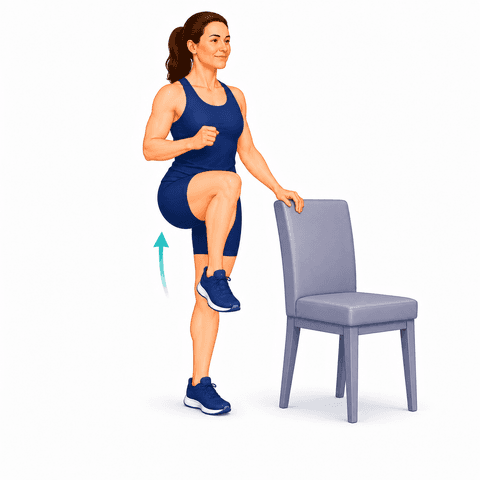
Improves hip mobility, balance, and walking mechanics.
What it helps: Builds the hip and core strength to lift each leg and step with control — rebuilding the basics of walking.
- Stand tall holding a counter or sturdy surface.
- Lift one knee up toward your hip, then lower it back down.
- Alternate legs.
Tips:
- Keep your back straight and core gently engaged.
Commonly done as 2-3 sets of 10-20, 1-2x daily.
Standing Hip Abduction
Strengthens the muscles on the side of the hip.
What it helps: Strengthens the outer-hip muscles that hold you steady whenever you're on one leg — which is every step you take. Stronger here, steadier hip.
- Stand holding a counter for support.
- Lift your leg out to the side, keeping it straight.
- Lower slowly.
Tips:
- Keep your toes pointing forward.
Commonly done as 2-3 sets of 10-15, 1-2x daily.
Standing Hip Extension
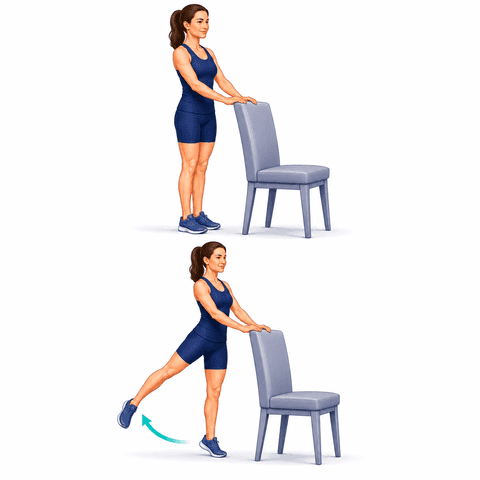
Strengthens the muscles behind the hip.
What it helps: Strengthens the muscles behind the hip that power you forward with each step and help you stand tall — the engine of a strong, even stride.
- Stand holding a counter.
- Move your leg straight back without arching your back.
- Lower slowly.
Commonly done as 2-3 sets of 10-15, 1-2x daily.
Side-Lying Hip Abduction

Strengthens the muscles on the side of the hip.
What it helps: Loads the side-hip muscles a step harder, building the strength that keeps your hip level and takes pressure off the joint on stairs and longer walks.
- Lie on your side with the bottom leg bent for support.
- Keep the top leg straight and raise it toward the ceiling.
- Hold briefly, then lower slowly.
Tips:
- Keep your toes pointing forward, not up.
Commonly done as 2-3 sets of 10-15, daily.
Side-Lying Hip Adduction

Strengthens the inner thigh.
What it helps: Strengthens the inner-thigh muscles that help control the leg and steady the hip and knee.
- Lie on your side with the top leg bent and crossed in front.
- Keep the bottom leg straight and lift it a few inches.
- Hold briefly, then lower slowly.
Commonly done as 2-3 sets of 10-15, daily.
Straight Leg Raises
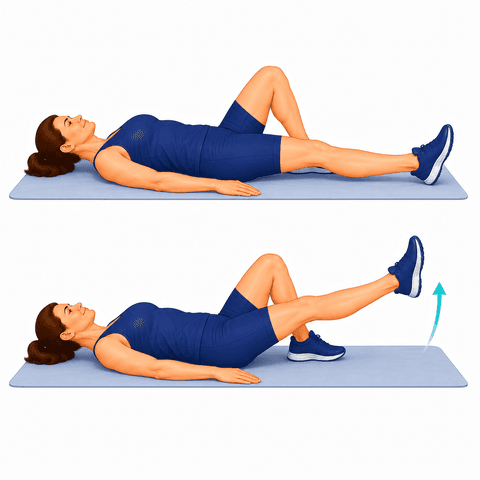
Strengthens the thigh while protecting the joint.
What it helps: Builds quad and hip strength while the knee stays straight, so the muscle works hard without stressing the joint.
- Lie down with one leg bent and the other straight.
- Tighten your thigh and lift the straight leg a few inches.
- Lower slowly.
Tips:
- Keep the knee straight as you lift.
Commonly done as 2-3 sets of 10, once or twice a day.
Seated Rotation Stretch

Gently stretches the hip and lower back.
What it helps: Gently stretches the hip and lower back, keeping the midsection supple.
- Sit with both legs straight in front of you.
- Cross one leg over the other.
- Slowly twist toward the bent leg, using your hand behind you for support.
- Hold, then relax.
Tips:
- Hold about 30 seconds. Move slowly.
Commonly done as 4 repetitions, daily.
Biceps Curls (Upper Body)
Builds the arm strength you'll use for a walker or crutches after surgery.
What it helps: Builds the arm strength you rely on for lifting and carrying — and for managing crutches or a walker.
- Sit tall or stand with your elbow close to your side.
- Bend your elbow, bringing your hand toward your shoulder.
- Lower slowly with control.
Tips:
- A light weight or a can of soup works well. Keep your wrist straight.
Commonly done as 2-3 sets of 5-10, daily.
Seated Press-Up
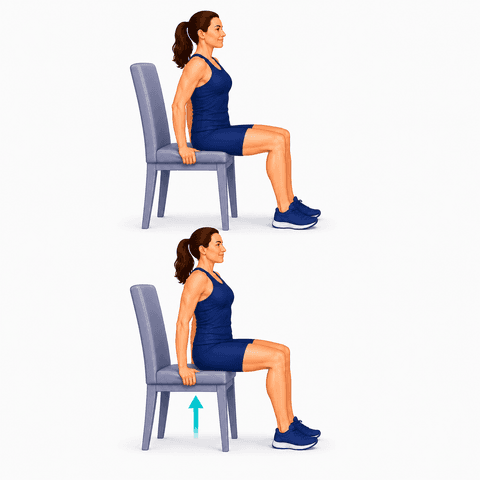
Builds the arm and shoulder strength to push up from a chair.
What it helps: Builds the arm and shoulder strength to push yourself up from a chair — everyday independence.
- Sit in a sturdy chair with armrests.
- Place your palms on the armrests and press down to lift your hips off the seat.
- Hold a few seconds, then lower slowly.
Tips:
- Start with what's comfortable and build up.
Commonly done as 5-10 repetitions, daily.
Low-Impact Conditioning
Easy on the joints, builds the endurance that speeds recovery.
What it helps: Keeps your heart and muscles working with activities that stay gentle on the joints — fitness without the pounding.
- Pick a comfortable activity: walking, stationary bike, cycling, elliptical, swimming, or rowing.
- Warm up 10-15 minutes before your exercises.
- Build toward 20-30 minutes as you're able.
Tips:
- Choose what you enjoy — consistency matters more than intensity.
Commonly done most days.
Standing Hip Abduction
Strengthens the muscles on the side of the hip.
What it helps: Strengthens the outer-hip muscles that hold you steady whenever you're on one leg — which is every step you take. Stronger here, steadier hip.
- Stand holding a counter for support.
- Lift your leg out to the side, keeping it straight.
- Lower slowly.
Tips:
- Keep your toes pointing forward.
Commonly done as 2-3 sets of 10-15, 1-2x daily.
Standing Hip Extension
Strengthens the muscles behind the hip.
What it helps: Strengthens the muscles behind the hip that power you forward with each step and help you stand tall — the engine of a strong, even stride.
- Stand holding a counter.
- Move your leg straight back without arching your back.
- Lower slowly.
Commonly done as 2-3 sets of 10-15, 1-2x daily.
Prone Hip Extension
Strengthens the muscles behind the hip and buttock.
What it helps: Strengthens the glutes and muscles behind the hip that power each step and help you stand tall.
- Lie on your stomach on a firm surface.
- Bend one knee to 90 degrees.
- Lift that knee a few inches off the surface, then lower slowly.
Tips:
- Keep your hips down; avoid arching your back.
Commonly done as 2-3 sets of 10, daily.
Side-Lying Hip Rotation (Clamshell)

Strengthens the deep rotators of the hip.
What it helps: Strengthens the deep rotators of the hip that steady the joint and control the leg.
- Lie on your side with knees bent and stacked.
- Keeping your feet together, lift the top knee like a clamshell opening.
- Lower slowly.
Tips:
- Keep your hips stacked; don't roll backward.
Commonly done as 2-3 sets of 10-15, daily.
Mini Squats
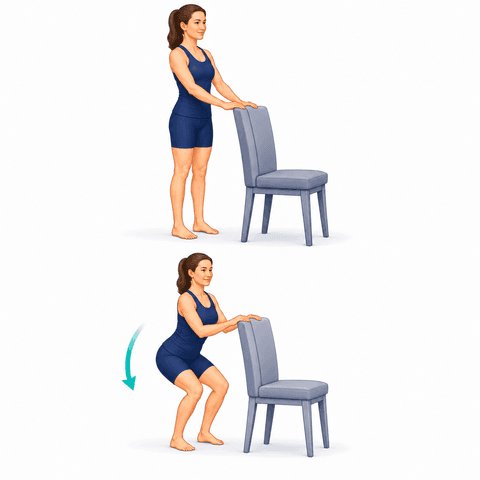
Builds leg strength through a comfortable range.
What it helps: Builds hip and leg strength through a comfortable range, so everyday moves — sitting, standing, bending — take less out of your joints.
- Stand holding a counter.
- Bend your knees a small amount, keeping them behind your toes.
- Return to standing.
Commonly done as 2-3 sets of 10, once or twice a day.
Sit-to-Stand
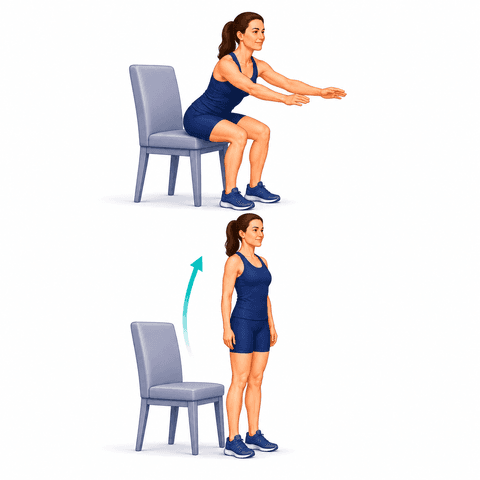
Builds the strength and confidence to rise from a chair.
What it helps: Trains the exact strength you use to rise from a chair, a toilet, or a car. Stronger here means more independence and less of a struggle on tough days.
- Sit at the edge of a sturdy chair.
- Lean slightly forward and stand up.
- Lower yourself back down with control.
Tips:
- Use your arms for support as needed.
Commonly done as 2-3 sets of 8-10, once or twice a day.
Single-Leg Balance
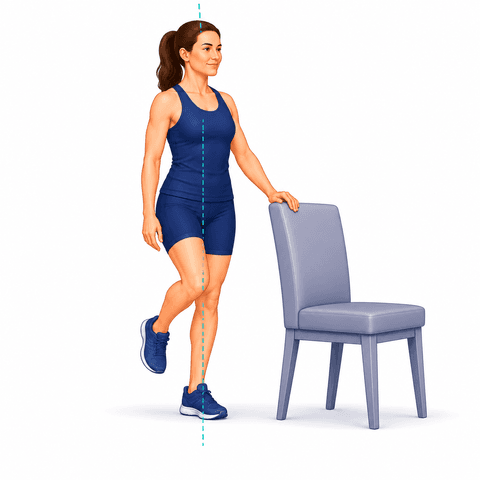
Improves balance and stability.
What it helps: Trains your hip and leg to stay steady when all your weight is on one side — which is most of walking. Better balance means a surer, more confident step.
- Stand near a counter for safety.
- Lift one foot and balance on the other leg.
- Hold as able.
Commonly done daily.
Standing Marches
Improves hip mobility, balance, and walking mechanics.
What it helps: Builds the hip and core strength to lift each leg and step with control — rebuilding the basics of walking.
- Stand tall holding a counter or sturdy surface.
- Lift one knee up toward your hip, then lower it back down.
- Alternate legs.
Tips:
- Keep your back straight and core gently engaged.
Commonly done as 2-3 sets of 10-20, 1-2x daily.
Biceps Curls (Upper Body)
Builds the arm strength you'll use for a walker or crutches after surgery.
What it helps: Builds the arm strength you rely on for lifting and carrying — and for managing crutches or a walker.
- Sit tall or stand with your elbow close to your side.
- Bend your elbow, bringing your hand toward your shoulder.
- Lower slowly with control.
Tips:
- A light weight or a can of soup works well. Keep your wrist straight.
Commonly done as 2-3 sets of 5-10, daily.
Seated Press-Up
Builds the arm and shoulder strength to push up from a chair.
What it helps: Builds the arm and shoulder strength to push yourself up from a chair — everyday independence.
- Sit in a sturdy chair with armrests.
- Place your palms on the armrests and press down to lift your hips off the seat.
- Hold a few seconds, then lower slowly.
Tips:
- Start with what's comfortable and build up.
Commonly done as 5-10 repetitions, daily.
Phase 1
Ankle Pumps
Improves circulation and helps reduce swelling.
What it helps: Keeps blood moving to reduce swelling and the risk of clots while you're less active — small, frequent, and important early on.
- Flex your foot up, pointing your toes toward the ceiling.
- Point your toes down, away from your body.
Tips:
- Move slowly and with control.
Commonly done as 20 repetitions, several times a day.
Glute Squeezes
Gently re-engages the buttock muscles.
What it helps: Wakes up the glutes — the big muscles that steady and support your hip. Getting them firing again is the first step toward a hip that feels stronger and carries you with less strain on the joint.
- Lie or sit comfortably.
- Squeeze your buttock muscles together.
- Hold a few seconds, then relax.
Commonly done as 2-3 sets of 10, a few times a day.
Quad Sets
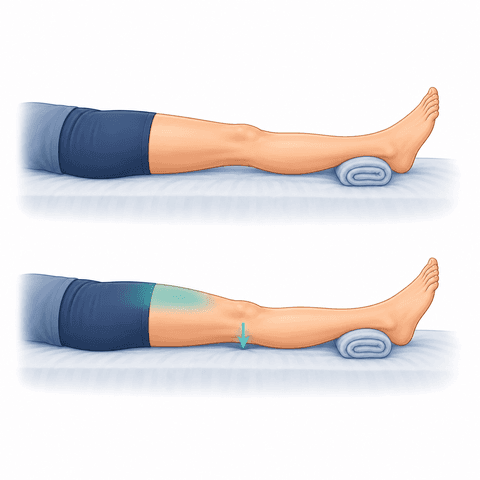
Re-activates the thigh muscle and supports knee control.
What it helps: Wakes up the quadriceps — the big thigh muscles that support and control your knee. Getting them firing is the foundation of a strong, steady leg.
- Sit or lie with your leg straight.
- Tighten the muscle on top of your thigh, pressing the back of your knee down.
- Hold briefly, then relax.
Commonly done as 2-3 sets of 10, a few times a day.
Heel Slides
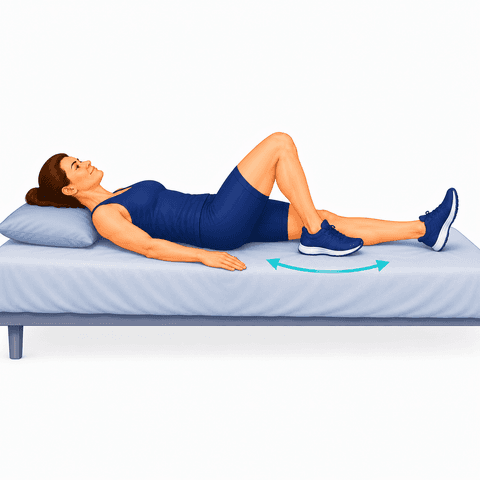
Encourages early, gentle knee motion.
What it helps: Coaxes gentle bending back into the knee — restoring the motion you need for stairs, sitting, and getting in and out of a car.
- Lie on your back with your legs straight.
- Slowly slide your heel toward you, bending the knee.
- Slide it back down.
Tips:
- Only go as far as is comfortable.
Commonly done as 2-3 sets of 10, a few times a day.
Standing Marches
Improves hip mobility, balance, and walking mechanics.
What it helps: Builds the hip and core strength to lift each leg and step with control — rebuilding the basics of walking.
- Stand tall holding a counter or sturdy surface.
- Lift one knee up toward your hip, then lower it back down.
- Alternate legs.
Tips:
- Keep your back straight and core gently engaged.
Commonly done as 2-3 sets of 10-20, 1-2x daily.
Standing Hip Abduction
Strengthens the muscles on the side of the hip.
What it helps: Strengthens the outer-hip muscles that hold you steady whenever you're on one leg — which is every step you take. Stronger here, steadier hip.
- Stand holding a counter for support.
- Lift your leg out to the side, keeping it straight.
- Lower slowly.
Tips:
- Keep your toes pointing forward.
Commonly done as 2-3 sets of 10-15, 1-2x daily.
Sit-to-Stand
Builds the strength and confidence to rise from a chair.
What it helps: Trains the exact strength you use to rise from a chair, a toilet, or a car. Stronger here means more independence and less of a struggle on tough days.
- Sit at the edge of a sturdy chair.
- Lean slightly forward and stand up.
- Lower yourself back down with control.
Tips:
- Use your arms for support as needed.
Commonly done as 2-3 sets of 8-10, once or twice a day.
Walking Program
Short, frequent walks build endurance and confidence.
What it helps: Comfortable, frequent walking keeps the joints loose, builds your stamina, and rebuilds confidence on your feet. Little and often beats long and tiring.
- Take short walks at a comfortable pace.
- Increase your distance gradually as you feel able.
Tips:
- Use your assistive device as directed.
Commonly done throughout the day.
Phase 2
Walking Program
Short, frequent walks build endurance and confidence.
What it helps: Comfortable, frequent walking keeps the joints loose, builds your stamina, and rebuilds confidence on your feet. Little and often beats long and tiring.
- Take short walks at a comfortable pace.
- Increase your distance gradually as you feel able.
Tips:
- Use your assistive device as directed.
Commonly done throughout the day.
Standing Marches
Improves hip mobility, balance, and walking mechanics.
What it helps: Builds the hip and core strength to lift each leg and step with control — rebuilding the basics of walking.
- Stand tall holding a counter or sturdy surface.
- Lift one knee up toward your hip, then lower it back down.
- Alternate legs.
Tips:
- Keep your back straight and core gently engaged.
Commonly done as 2-3 sets of 10-20, 1-2x daily.
Standing Hip Abduction
Strengthens the muscles on the side of the hip.
What it helps: Strengthens the outer-hip muscles that hold you steady whenever you're on one leg — which is every step you take. Stronger here, steadier hip.
- Stand holding a counter for support.
- Lift your leg out to the side, keeping it straight.
- Lower slowly.
Tips:
- Keep your toes pointing forward.
Commonly done as 2-3 sets of 10-15, 1-2x daily.
Standing Hip Extension
Strengthens the muscles behind the hip.
What it helps: Strengthens the muscles behind the hip that power you forward with each step and help you stand tall — the engine of a strong, even stride.
- Stand holding a counter.
- Move your leg straight back without arching your back.
- Lower slowly.
Commonly done as 2-3 sets of 10-15, 1-2x daily.
Mini Squats
Builds leg strength through a comfortable range.
What it helps: Builds hip and leg strength through a comfortable range, so everyday moves — sitting, standing, bending — take less out of your joints.
- Stand holding a counter.
- Bend your knees a small amount, keeping them behind your toes.
- Return to standing.
Commonly done as 2-3 sets of 10, once or twice a day.
Heel Raises
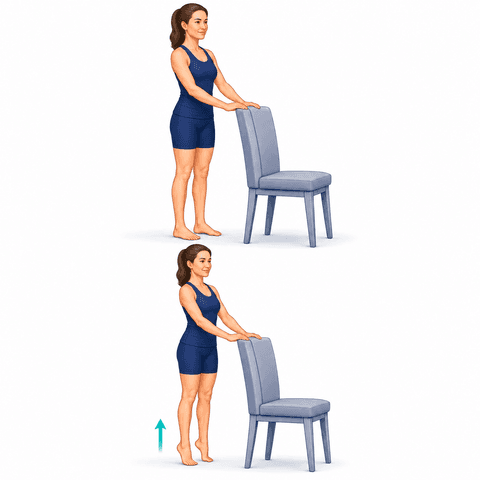
Strengthens the calf and improves balance.
What it helps: Strengthens the calf and steadies your balance, rebuilding the push-off that drives walking.
- Stand holding a counter.
- Rise up onto your toes.
- Lower slowly.
Commonly done as 2-3 sets of 10-15, once or twice a day.
Step-Ups
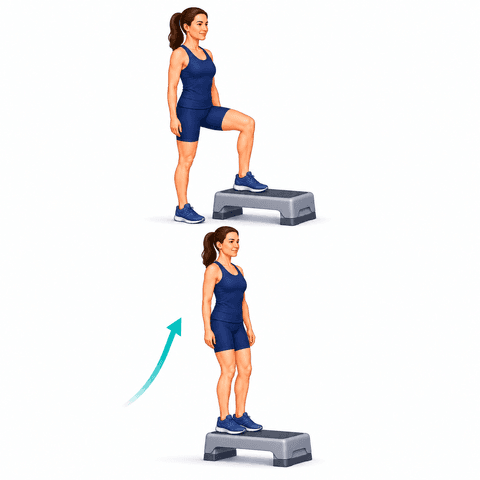
Builds strength for stairs and daily activity.
What it helps: Builds the leg and hip strength — and the control — for stairs, curbs, and everyday activity.
- Step up onto a low step with your operative leg.
- Step back down with control.
Tips:
- Hold a rail for balance.
Commonly done as 2-3 sets of 10, once or twice a day.
Stationary Bike
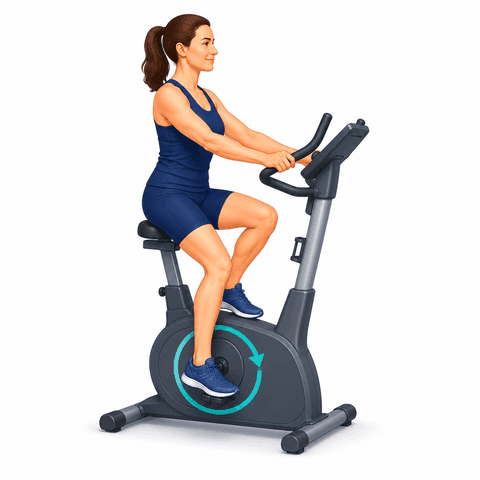
Builds motion and endurance with low impact.
What it helps: Keeps the joints moving and nourished while you build endurance — all with no pounding. One of the gentlest ways to stay active when a joint is sore.
- Set the seat so pedaling is comfortable.
- Pedal at an easy pace.
- Increase your time gradually.
Commonly done as directed.
Phase 3
Stationary Bike
Builds motion and endurance with low impact.
What it helps: Keeps the joints moving and nourished while you build endurance — all with no pounding. One of the gentlest ways to stay active when a joint is sore.
- Set the seat so pedaling is comfortable.
- Pedal at an easy pace.
- Increase your time gradually.
Commonly done as directed.
Step-Ups & Step-Downs
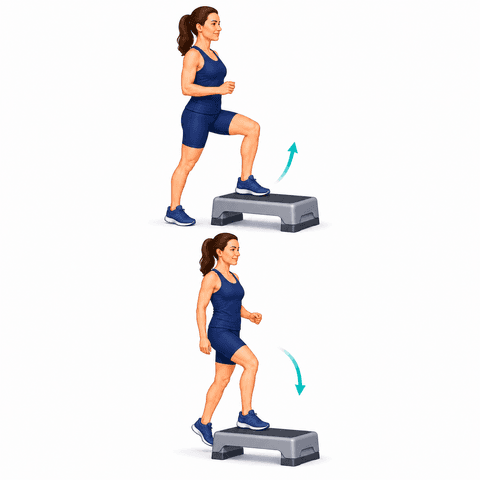
Advances stair strength and control.
What it helps: Advances your stair strength and the control to come down as confidently as you go up.
- Step up onto a step, then step down slowly.
- Control the lowering phase.
Tips:
- Hold a rail for balance.
Commonly done as 2-3 sets of 10, once or twice a day.
Mini Squats
Builds leg strength through a comfortable range.
What it helps: Builds hip and leg strength through a comfortable range, so everyday moves — sitting, standing, bending — take less out of your joints.
- Stand holding a counter.
- Bend your knees a small amount, keeping them behind your toes.
- Return to standing.
Commonly done as 2-3 sets of 10, once or twice a day.
Sit-to-Stand
Builds the strength and confidence to rise from a chair.
What it helps: Trains the exact strength you use to rise from a chair, a toilet, or a car. Stronger here means more independence and less of a struggle on tough days.
- Sit at the edge of a sturdy chair.
- Lean slightly forward and stand up.
- Lower yourself back down with control.
Tips:
- Use your arms for support as needed.
Commonly done as 2-3 sets of 8-10, once or twice a day.
Standing Hip Abduction
Strengthens the muscles on the side of the hip.
What it helps: Strengthens the outer-hip muscles that hold you steady whenever you're on one leg — which is every step you take. Stronger here, steadier hip.
- Stand holding a counter for support.
- Lift your leg out to the side, keeping it straight.
- Lower slowly.
Tips:
- Keep your toes pointing forward.
Commonly done as 2-3 sets of 10-15, 1-2x daily.
Standing Hip Extension
Strengthens the muscles behind the hip.
What it helps: Strengthens the muscles behind the hip that power you forward with each step and help you stand tall — the engine of a strong, even stride.
- Stand holding a counter.
- Move your leg straight back without arching your back.
- Lower slowly.
Commonly done as 2-3 sets of 10-15, 1-2x daily.
Single-Leg Balance
Improves balance and stability.
What it helps: Trains your hip and leg to stay steady when all your weight is on one side — which is most of walking. Better balance means a surer, more confident step.
- Stand near a counter for safety.
- Lift one foot and balance on the other leg.
- Hold as able.
Commonly done daily.
Walking Program
Short, frequent walks build endurance and confidence.
What it helps: Comfortable, frequent walking keeps the joints loose, builds your stamina, and rebuilds confidence on your feet. Little and often beats long and tiring.
- Take short walks at a comfortable pace.
- Increase your distance gradually as you feel able.
Tips:
- Use your assistive device as directed.
Commonly done throughout the day.
Phase 4
Progressive Walking Program
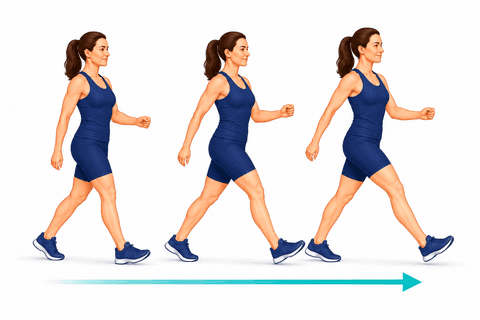
Keep building your walking distance and pace.
What it helps: Keep building your walking distance and pace — steady gains in endurance and confidence on your feet.
Commonly done daily.
Cycling
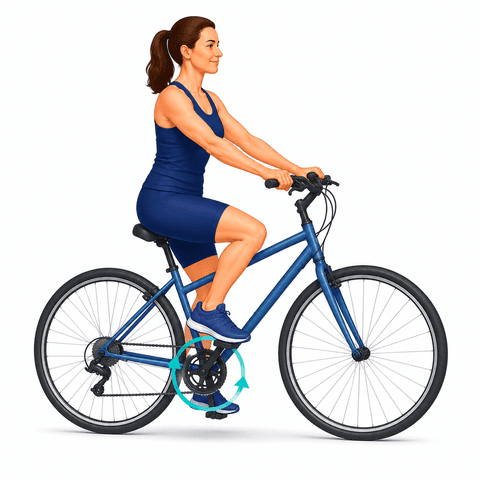
Low-impact endurance and motion.
What it helps: Low-impact endurance that keeps the joints moving smoothly while you build fitness — easy on the body, good for the long run.
Commonly done as able.
Swimming
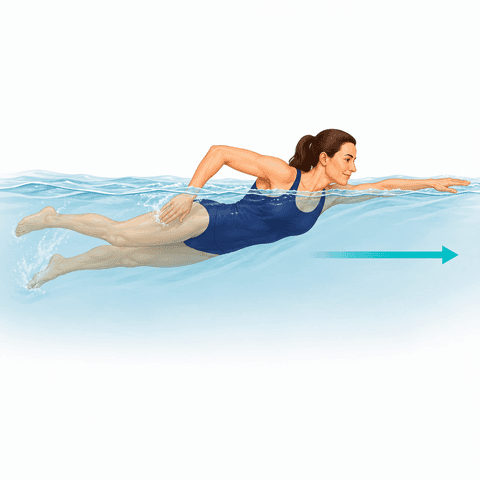
Low-impact, full-body conditioning.
What it helps: Full-body conditioning with the water carrying your weight, so your muscles work hard with almost no load on the joints.
Commonly done as able.
Elliptical Trainer
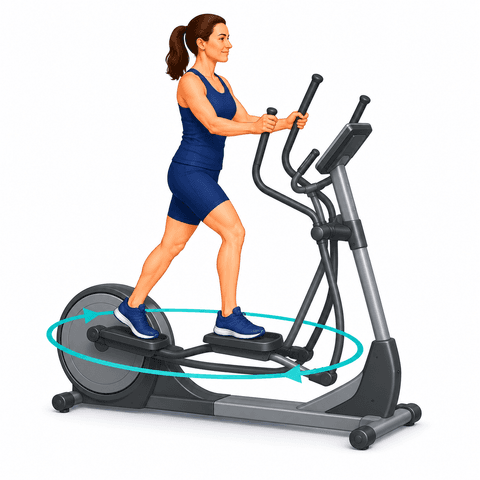
Low-impact cardio that is easy on the joints.
What it helps: Low-impact cardio that builds endurance and keeps the legs moving while staying easy on the joints.
Commonly done as able.
Resistance Band Strengthening
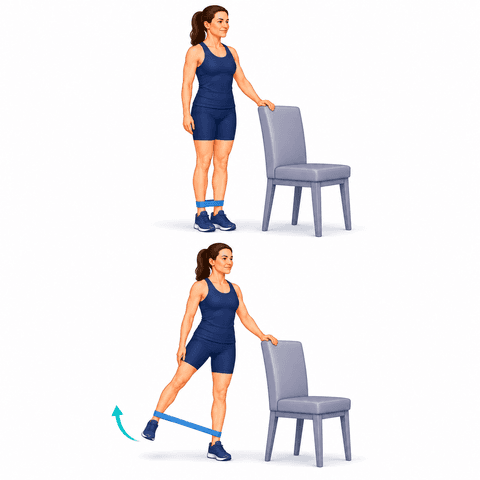
Adds gentle resistance to build strength.
What it helps: Adds gentle, adjustable resistance to build strength steadily as you recover.
- Use a band for hip or leg exercises as directed.
- Move slowly through the range.
Commonly done a few times a week.
Balance Training
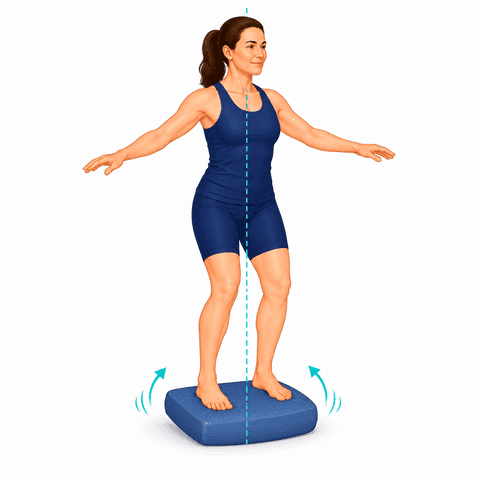
Ongoing balance work for steady movement.
What it helps: Sharpens your steadiness and reactions so you move with confidence and lower your risk of a fall — protecting the progress you've made.
Commonly done a few times a week.
Core Strengthening
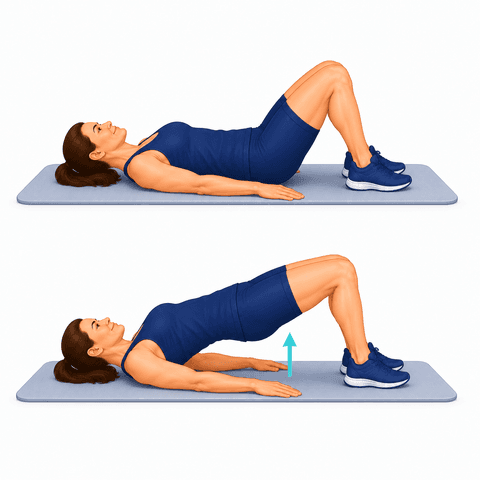
Supports posture and overall stability.
What it helps: Builds the core that holds your trunk steady, supporting your posture, your back, and everything you do on your feet.
- Perform gentle core exercises as directed.
Commonly done a few times a week.
Phase 5
Walking Program
Short, frequent walks build endurance and confidence.
What it helps: Comfortable, frequent walking keeps the joints loose, builds your stamina, and rebuilds confidence on your feet. Little and often beats long and tiring.
- Take short walks at a comfortable pace.
- Increase your distance gradually as you feel able.
Tips:
- Use your assistive device as directed.
Commonly done throughout the day.
Cycling
Low-impact endurance and motion.
What it helps: Low-impact endurance that keeps the joints moving smoothly while you build fitness — easy on the body, good for the long run.
Commonly done as able.
Swimming
Low-impact, full-body conditioning.
What it helps: Full-body conditioning with the water carrying your weight, so your muscles work hard with almost no load on the joints.
Commonly done as able.
Strength Training
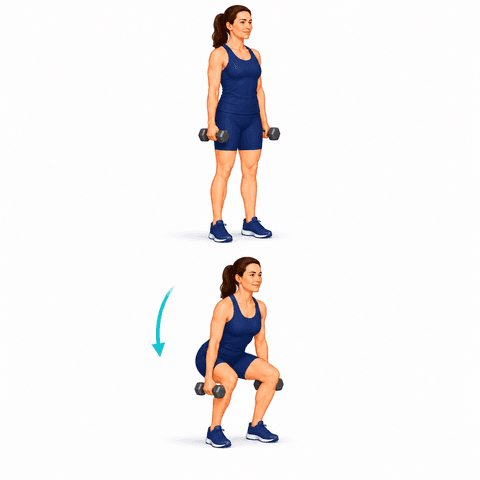
Maintains and builds long-term strength.
What it helps: Builds and maintains long-term strength to keep you active, resilient, and independent.
Commonly done a few times a week.
Balance Exercises
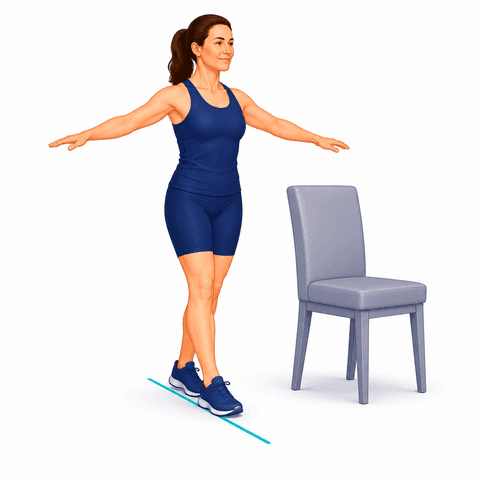
General balance work to steady your gait.
What it helps: Steadies your gait and sharpens your balance, helping you move with confidence.
- Practice standing balance near support.
- Progress as you feel steady.
Commonly done daily.
Flexibility Exercises
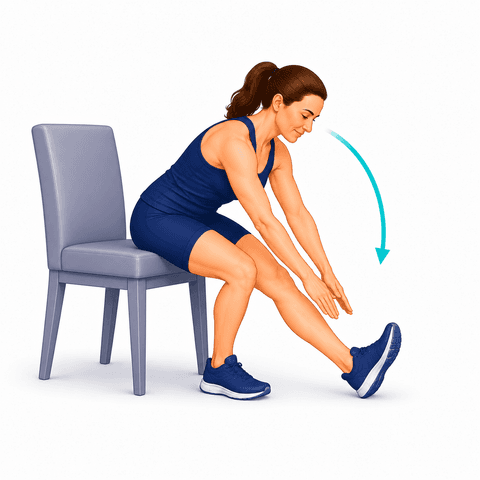
Maintains a comfortable range of motion.
What it helps: Keeps your joints and muscles moving through a comfortable range, so you stay supple and move with ease.
Commonly done most days.
Core Strengthening
Supports posture and overall stability.
What it helps: Builds the core that holds your trunk steady, supporting your posture, your back, and everything you do on your feet.
- Perform gentle core exercises as directed.
Commonly done a few times a week.
Low-Impact Recreational Activities
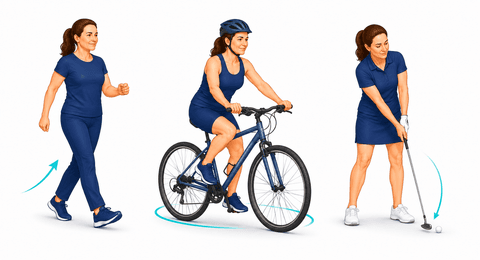
Enjoyable activities that protect your joint.
What it helps: Getting back to the activities you enjoy in ways that are kind to your joints — the whole point of building this strength.
Commonly done as you like.
Recovery reading
Browse all exercise guides · Condition guides · Recovery education library
These are general exercise guides, not a personal prescription. The repetitions and frequency shown are what's commonly used — your own surgeon or therapist may advise something different, and their guidance comes first.