Needle Aponeurotomy (Dupuytren) — Complete Exercise Program
Looking for a shorter starting point? The Needle Aponeurotomy (Dupuytren) starter guide covers the first 8 exercises on a printable sheet.
A phase-by-phase exercise program used in recovery for needle aponeurotomy (dupuytren). Each movement includes what it's working on and how it's typically performed. Your own surgeon's or therapist's guidance always comes first.
Immediate Recovery
Weeks 0–1
Finger & Hand Stretch
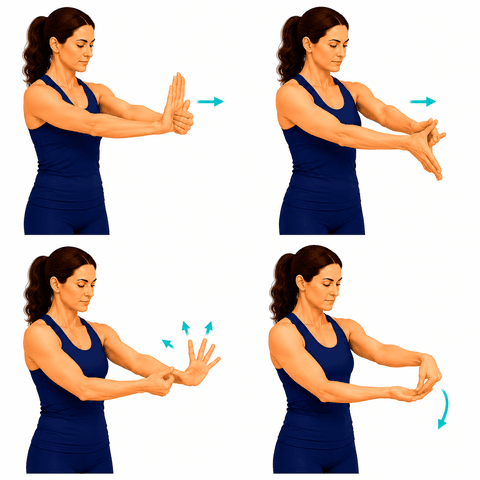
Gentle stretches for the fingers and palm to ease stiffness.
What it helps: Eases stiffness in the finger joints and palm — keeping the hand supple and the fingers moving freely for grip and pinch.
- Gently straighten the fingers back with the other hand until you feel a mild stretch in the palm and fingers.
- Spread the fingers wide and hold.
- Gently bend each finger and hold a moment.
Tips:
- Gentle, mild stretches — never force a stiff or sore joint.
- A warm soak or heat first makes stretching more comfortable.
Commonly done as 2–3 sets of Hold 10–15 sec, daily.
Finger Range of Motion
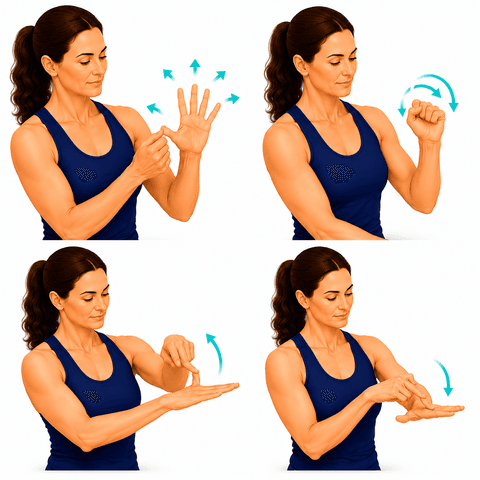
Gentle bending and straightening to keep the finger joints moving.
What it helps: Keeps the finger joints moving through their full range — preserving the bend and straighten you need to grip, pinch, and use your hands for everything.
- Open the hand wide, fingers straight.
- Make a full fist, then open again.
- Bend each finger one at a time toward the palm, then straighten.
Tips:
- Smooth, comfortable motion through the whole range.
- Do it often through the day, especially when the hand feels stiff.
Commonly done as 2–3 sets of 10, daily (several times).
Hand & Wrist Elevation and Swelling Control
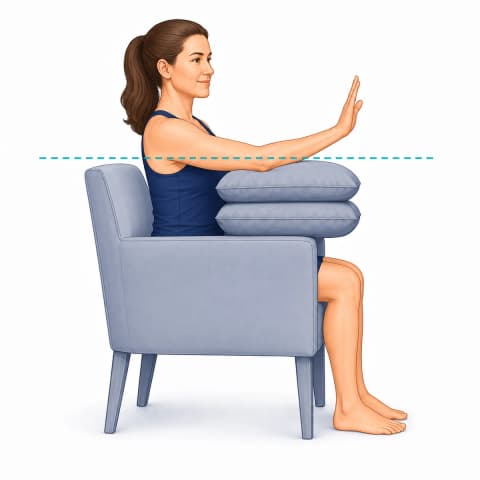
Keeping the hand above heart level and pumping the fingers — the most important thing you do in the first fortnight.
What it helps: Controls the swelling that is the main cause of stiffness after hand and wrist surgery. A swollen hand cannot make a full fist, and fingers left stiff in the first weeks are much harder to free later than the wrist itself is.
- Rest the hand higher than your heart. Sitting, prop the whole forearm on a stack of cushions so the hand sits above chest level.
- Standing, rest it on the opposite shoulder; lying down, support the whole forearm on pillows.
- With the hand up, slowly make a loose fist and open it fully, spreading the fingers.
- Repeat the slow fist-and-open several times, then let the hand rest in the raised position.
- Come back to it regularly through the day rather than doing one long session.
Tips:
- Above the heart is the part that matters. A hand resting on your lap or in a sling at waist height is not elevated, and this is the commonest reason swelling does not settle.
- The fist-and-open is a pump: muscles squeezing push fluid back up the arm. Elevation alone works, but elevation with movement works far better.
- A hand that is puffy and stiff first thing in the morning usually means it spent the night down; support it on pillows in bed.
Commonly done as every hour while awake sets of 10 slow fists, daily.
Thumb Range of Motion

Gentle thumb movements that keep the base of the thumb mobile.
What it helps: Keeps the thumb's wide range — reaching, pinching, and opposing to the fingers — which is behind nearly every grip and pinch task the hand does.
- Move the thumb out away from the palm, then back.
- Touch the thumb tip to each fingertip in turn (opposition).
- Make gentle circles with the thumb. Keep it comfortable.
Tips:
- Smooth, pain-free motion.
- Opposition (thumb to fingertips) is the key everyday motion to keep.
Commonly done as 2–3 sets of 8–10 each, daily.
Wrist Range of Motion
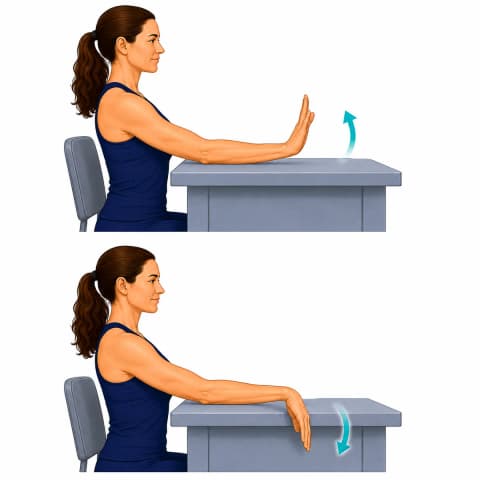
Gentle bending and side-to-side motion to keep the wrist moving freely.
What it helps: Keeps the wrist moving through its full range — preserving the bend, straighten, and side-to-side motion you use for everyday hand tasks.
- Rest your forearm on a table with your hand just past the edge, hand open and relaxed.
- Bend the wrist up so the back of the hand rises, then down so the fingers drop, through a comfortable range.
- Then move the hand side to side — toward the thumb, then toward the little finger.
- Finally make slow circles.
Tips:
- Smooth, comfortable motion — don't force the ends.
- Keep the forearm supported so only the wrist moves.
- No weight for this one. It is about movement, not strength — that is what separates it from wrist curls.
Commonly done as 2–3 sets of 10 each, daily.
Walking Program
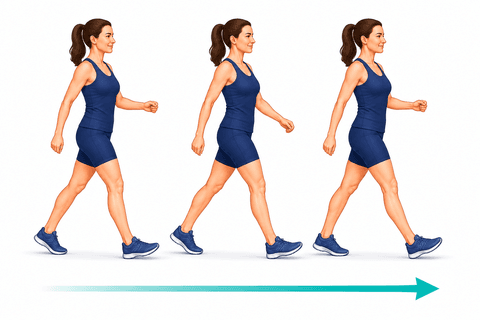
Short, frequent walks build endurance and confidence.
What it helps: Comfortable, frequent walking keeps the joints loose, builds your stamina, and rebuilds confidence on your feet. Little and often beats long and tiring.
- Take short walks at a comfortable pace.
- Increase your distance gradually as you feel able.
Tips:
- Use your assistive device as directed.
Commonly done throughout the day.
Restoring Motion
Weeks 1–4
Finger & Hand Stretch
Gentle stretches for the fingers and palm to ease stiffness.
What it helps: Eases stiffness in the finger joints and palm — keeping the hand supple and the fingers moving freely for grip and pinch.
- Gently straighten the fingers back with the other hand until you feel a mild stretch in the palm and fingers.
- Spread the fingers wide and hold.
- Gently bend each finger and hold a moment.
Tips:
- Gentle, mild stretches — never force a stiff or sore joint.
- A warm soak or heat first makes stretching more comfortable.
Commonly done as 2–3 sets of Hold 10–15 sec, daily.
Tendon Gliding (Finger Glides)
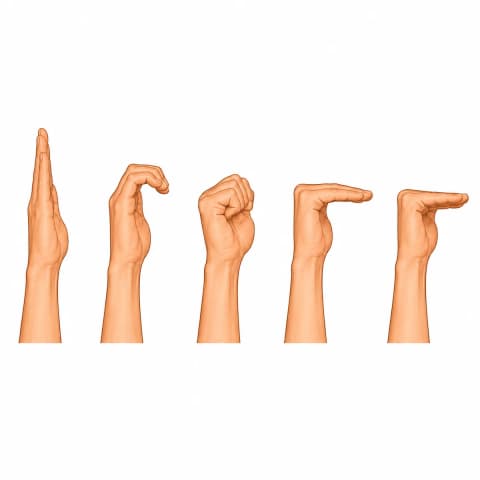
A sequence of finger positions that keeps the tendons sliding smoothly through the hand and wrist.
What it helps: Keeps the finger tendons sliding freely through their sheaths and the carpal tunnel — preventing stiffness and catching, and keeping the hand smooth and supple.
- Start with fingers straight.
- Bend just the top two knuckles into a "hook," then straighten.
- Make a full fist, then straighten.
- Bend the big knuckles only into a "tabletop," then straighten.
- Make a "straight fist" (fingers curled but knuckles flat). Move slowly through each.
Tips:
- Move smoothly through the whole sequence.
- Gentle and controlled — these keep the tendons gliding, not strengthening.
Commonly done as 2–3 sets of 5–10 of each, daily.
Blocking Exercises (Isolated Joint Motion)
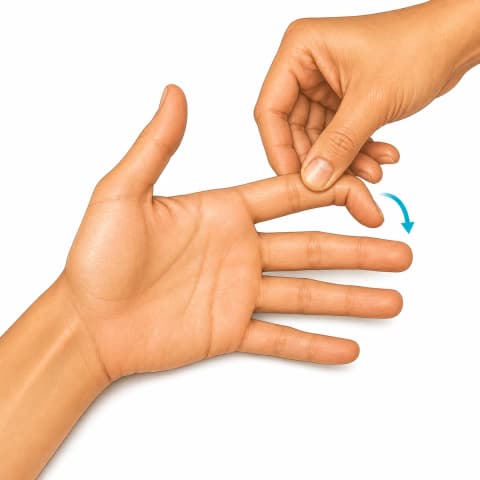
Holding one finger joint still so the movement is forced through the next one.
What it helps: Forces a tendon to glide rather than letting the finger move as a single unit, which is how stiffness at one joint gets missed. It is the most reliable way to recover movement at a specific joint after a tendon repair or a finger injury.
- Rest the injured hand palm-up on a table.
- With the other hand, hold the finger firmly just below the joint you want to move, keeping the joints closer to the palm completely still.
- Now bend and straighten only the free joint beyond where you are holding, slowly and through as much range as it will go.
- Move the holding hand to the next joint along and repeat.
Tips:
- The point is isolation. If the whole finger is curling as a unit, move your holding hand closer to the joint you are working.
- Slow and deliberate beats fast. Each repetition is asking the tendon to slide a specific distance.
- These often reveal that one joint is much stiffer than the rest, which is exactly what they are for.
Commonly done as 2–3 sets of 10 per joint, daily.
Finger Range of Motion
Gentle bending and straightening to keep the finger joints moving.
What it helps: Keeps the finger joints moving through their full range — preserving the bend and straighten you need to grip, pinch, and use your hands for everything.
- Open the hand wide, fingers straight.
- Make a full fist, then open again.
- Bend each finger one at a time toward the palm, then straighten.
Tips:
- Smooth, comfortable motion through the whole range.
- Do it often through the day, especially when the hand feels stiff.
Commonly done as 2–3 sets of 10, daily (several times).
Finger Abduction & Adduction
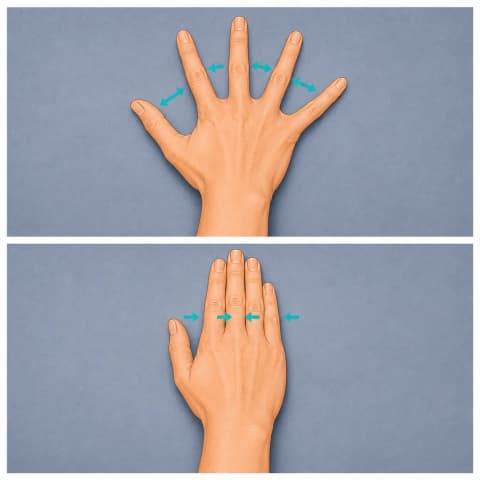
Spreading and squeezing the fingers — training the small hand muscles the ulnar nerve supplies.
What it helps: Targets the small muscles between the fingers, which are supplied by the ulnar nerve and are the first to waste when it is compressed. They are what allow fine, coordinated hand use — holding cards, turning a key, gripping without the fingers splaying — and they recover only if they are specifically trained.
- Rest your hand flat on a table, palm down, fingers straight.
- Spread the fingers as wide apart as you can, then bring them back together tightly.
- Next, place a folded piece of paper between two fingers and squeeze to hold it while you gently try to pull it away with the other hand.
- Work through each gap between the fingers in turn.
Tips:
- The movement is small and the muscles are small — this is about control and endurance rather than force.
- Doing it with the hand flat on a table stops the bigger forearm muscles taking over.
- If the muscles are weak these will feel almost impossible at first. That is the point of doing them.
Commonly done as 2–3 sets of 10 each way, daily.
Walking Program
Short, frequent walks build endurance and confidence.
What it helps: Comfortable, frequent walking keeps the joints loose, builds your stamina, and rebuilds confidence on your feet. Little and often beats long and tiring.
- Take short walks at a comfortable pace.
- Increase your distance gradually as you feel able.
Tips:
- Use your assistive device as directed.
Commonly done throughout the day.
Strength & Function
Weeks 4–10
Grip Strengthening
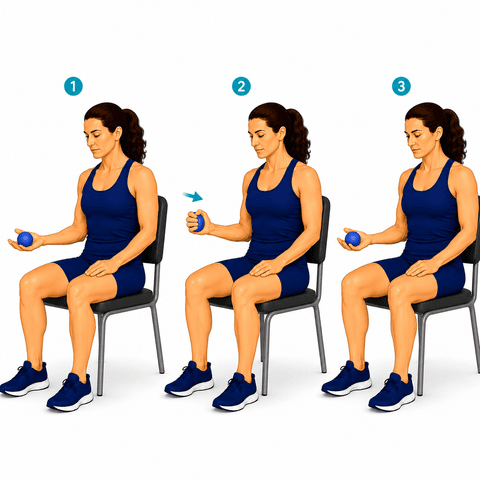
Builds hand and forearm grip strength with a ball or putty.
What it helps: Builds the grip and forearm strength behind almost every hand task — and supports the tendons at the elbow that grip relies on.
- Hold a soft ball or therapy putty in your hand.
- Squeeze firmly and hold a few seconds, then relax fully.
- Work through comfortable effort; stop short of sharp pain.
Tips:
- Full squeeze, full relax — both matter.
- Grip work loads the elbow tendons, so build it gradually if you have tennis or golfer's elbow.
Commonly done as 2–3 sets of 10–15, most days.
Hand Putty Exercises
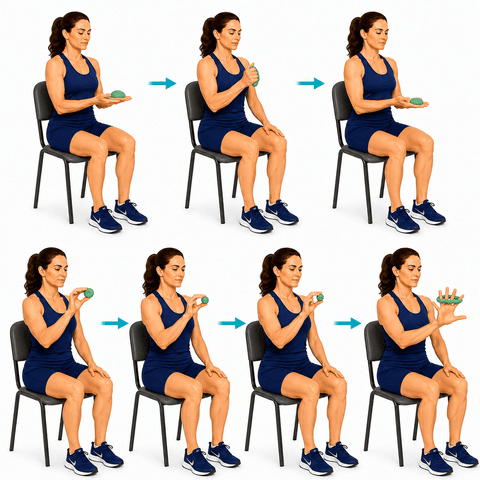
All-around hand strengthening with therapy putty — grip, pinch, and spread.
What it helps: Builds all-around hand and finger strength — grip, pinch, and the muscles that spread the fingers — the foundation of strong, capable hands for daily tasks.
- Squeeze the putty in a full fist, then release.
- Pinch the putty between the thumb and each fingertip in turn.
- Press the putty flat and dig individual fingers in; spread the fingers against a loop of putty.
Tips:
- Comfortable effort; full squeeze and full release.
- Putty comes in firmnesses — start soft and progress as you get stronger.
Commonly done as 2 sets of 10 each, most days.
Finger Extension (Rubber Band)
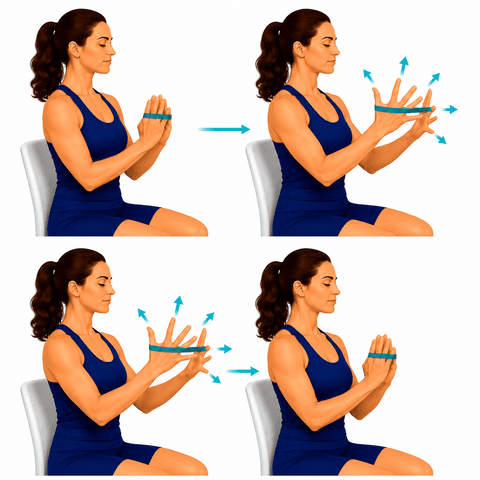
Strengthens the muscles that open the hand and straighten the fingers.
What it helps: Builds the often-overlooked muscles that open the hand — balancing the strong gripping muscles and supporting smooth, comfortable finger movement.
- Place a rubber band around the outside of your fingers and thumb.
- Open the fingers and thumb apart against the band's resistance.
- Slowly close back with control.
Tips:
- Use a band light enough to do smoothly.
- Controlled open and close — both directions matter.
Commonly done as 2 sets of 10–15, most days.
Finger & Hand Stretch
Gentle stretches for the fingers and palm to ease stiffness.
What it helps: Eases stiffness in the finger joints and palm — keeping the hand supple and the fingers moving freely for grip and pinch.
- Gently straighten the fingers back with the other hand until you feel a mild stretch in the palm and fingers.
- Spread the fingers wide and hold.
- Gently bend each finger and hold a moment.
Tips:
- Gentle, mild stretches — never force a stiff or sore joint.
- A warm soak or heat first makes stretching more comfortable.
Commonly done as 2–3 sets of Hold 10–15 sec, daily.
Wrist Curls
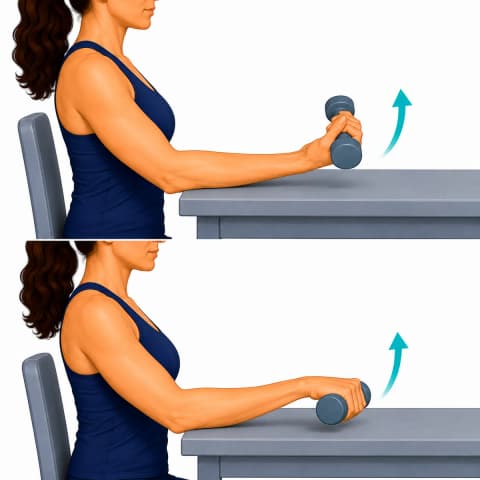
Strengthens the forearm muscles in both directions.
What it helps: Builds balanced forearm strength in both directions — the everyday strength behind a comfortable, capable wrist and grip.
- Rest your forearm on a table with your hand just past the edge, holding a light weight.
- Palm up: curl your wrist upward, then lower it slowly.
- Turn your forearm over so the palm faces down, then lift the back of your hand upward and lower it slowly.
- Move smoothly through a comfortable range.
Tips:
- Light weight, controlled motion.
- Your forearm stays resting on the table — only the wrist moves.
- Build the forearm in both directions for balance.
Commonly done as 2–3 sets of 12–15 each, most days.
Stationary Bike
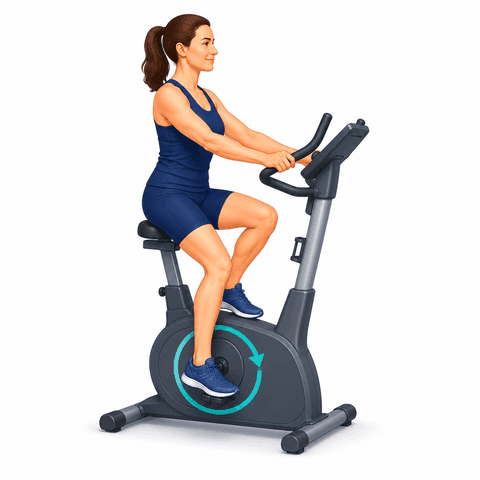
Builds motion and endurance with low impact.
What it helps: Keeps the joints moving and nourished while you build endurance — all with no pounding. One of the gentlest ways to stay active when a joint is sore.
- Set the seat so pedaling is comfortable.
- Pedal at an easy pace.
- Increase your time gradually.
Commonly done as directed.
Maintaining Extension
Months 3–12
Finger & Hand Stretch
Gentle stretches for the fingers and palm to ease stiffness.
What it helps: Eases stiffness in the finger joints and palm — keeping the hand supple and the fingers moving freely for grip and pinch.
- Gently straighten the fingers back with the other hand until you feel a mild stretch in the palm and fingers.
- Spread the fingers wide and hold.
- Gently bend each finger and hold a moment.
Tips:
- Gentle, mild stretches — never force a stiff or sore joint.
- A warm soak or heat first makes stretching more comfortable.
Commonly done as 2–3 sets of Hold 10–15 sec, daily.
Finger Range of Motion
Gentle bending and straightening to keep the finger joints moving.
What it helps: Keeps the finger joints moving through their full range — preserving the bend and straighten you need to grip, pinch, and use your hands for everything.
- Open the hand wide, fingers straight.
- Make a full fist, then open again.
- Bend each finger one at a time toward the palm, then straighten.
Tips:
- Smooth, comfortable motion through the whole range.
- Do it often through the day, especially when the hand feels stiff.
Commonly done as 2–3 sets of 10, daily (several times).
Grip Strengthening
Builds hand and forearm grip strength with a ball or putty.
What it helps: Builds the grip and forearm strength behind almost every hand task — and supports the tendons at the elbow that grip relies on.
- Hold a soft ball or therapy putty in your hand.
- Squeeze firmly and hold a few seconds, then relax fully.
- Work through comfortable effort; stop short of sharp pain.
Tips:
- Full squeeze, full relax — both matter.
- Grip work loads the elbow tendons, so build it gradually if you have tennis or golfer's elbow.
Commonly done as 2–3 sets of 10–15, most days.
Hand Putty Exercises
All-around hand strengthening with therapy putty — grip, pinch, and spread.
What it helps: Builds all-around hand and finger strength — grip, pinch, and the muscles that spread the fingers — the foundation of strong, capable hands for daily tasks.
- Squeeze the putty in a full fist, then release.
- Pinch the putty between the thumb and each fingertip in turn.
- Press the putty flat and dig individual fingers in; spread the fingers against a loop of putty.
Tips:
- Comfortable effort; full squeeze and full release.
- Putty comes in firmnesses — start soft and progress as you get stronger.
Commonly done as 2 sets of 10 each, most days.
Flexibility Exercises
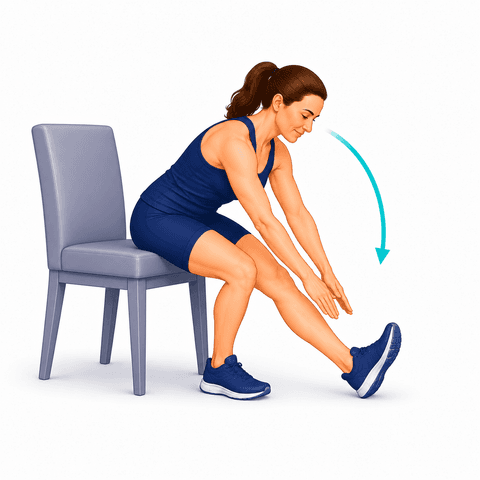
Maintains a comfortable range of motion.
What it helps: Keeps your joints and muscles moving through a comfortable range, so you stay supple and move with ease.
- Sit tall on a chair and slide one leg forward, heel on the floor and toes up.
- Hinge forward from the hips and reach gently toward that foot until you feel a stretch behind the thigh.
- Hold for around 30 seconds, breathing normally, then ease back.
- Repeat on the other side.
Tips:
- A stretch should feel like a long pull, never a pinch - and never bounce into it.
- Muscles stretch more easily when they are warm, so after a walk is a good time.
- The seated hamstring stretch drawn here is one example; your program may include stretches for other areas too.
Commonly done most days.
Low-Impact Recreational Activities
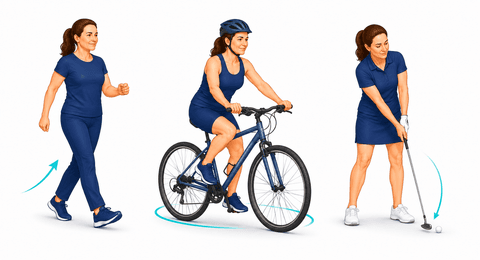
Enjoyable activities that protect your joint.
What it helps: Getting back to the activities you enjoy in ways that are kind to your joints — the whole point of building this strength.
- Choose activities that keep you moving without jarring the joint - walking, cycling and golf are three common ones.
- Start with a short session and add time before you add intensity.
- Spread them across the week rather than doing everything in one day.
- Keep the effort at a level where you could still hold a conversation.
Tips:
- The picture shows three examples, not a list to work through - the best activity is the one you will keep doing.
- A little stiffness the next day is usual; a flare that lingers means the session was too long, not that the activity was wrong.
- Your surgeon or therapist can say when each activity is a reasonable one to add.
Commonly done as you like.
What to expect in recovery
The full recovery guide for this procedure: Needle Aponeurotomy (Dupuytren) recovery.
Recovery reading
Browse all exercise guides · Condition guides · Recovery education library
Are you a clinician? See how orthopedic practices use JointBooklet.
These are general exercise guides, not a personal prescription. The repetitions and frequency shown are what's commonly used — your own surgeon or therapist may advise something different, and their guidance comes first.