Cervical Strain — Complete Exercise Program
Looking for a shorter starting point? The Cervical Strain starter guide covers the first 8 exercises on a printable sheet.
A phase-by-phase exercise program used in recovery for cervical strain. Each movement includes what it's working on and how it's typically performed. Your own surgeon's or therapist's guidance always comes first.
Phase 1
Gentle Cervical Range of Motion

Keeps the neck moving comfortably within a gentle, pain-free range.
What it helps: Keeps the neck moving comfortably so it doesn't stiffen — within the limits your surgeon sets.
- Slowly turn your head side to side, then gently tilt one ear toward your shoulder, within a comfortable, pain-free range.
- Move smoothly and return to center.
Tips:
- Never force or push into pain.
- Your care team can guide how much neck motion is right for you.
Commonly done as 5 each direction repetitions, 1–2 times a day.
Chin Tucks
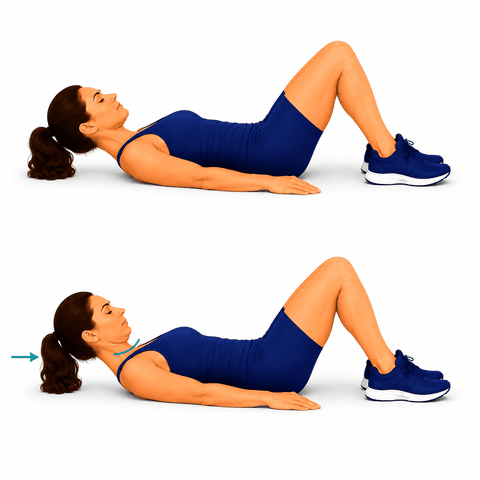
Activates the deep neck muscles that support and protect the cervical spine.
What it helps: Activates the deep neck muscles that support and protect the cervical spine and hold your head in good alignment.
- Sit or stand tall, looking straight ahead.
- Gently draw your chin straight back, making a "double chin" — without tilting your head up or down.
- Hold briefly, then relax.
Tips:
- Small, gentle motion — never force it.
- Imagine sliding your head back over your shoulders.
Commonly done as hold 3–5s sets of 10, several times a day.
Gentle Shoulder Rolls

Eases stiffness around the neck and shoulders.
What it helps: Eases stiffness around the neck and shoulders, keeping the area loose and comfortable.
- Sit or stand tall.
- Slowly roll your shoulders up, back, and down in a smooth circle.
- Repeat, then reverse direction.
Tips:
- Keep the motion slow and relaxed.
- Breathe as you move.
Commonly done as 10 each direction repetitions, several times a day.
Diaphragmatic Breathing
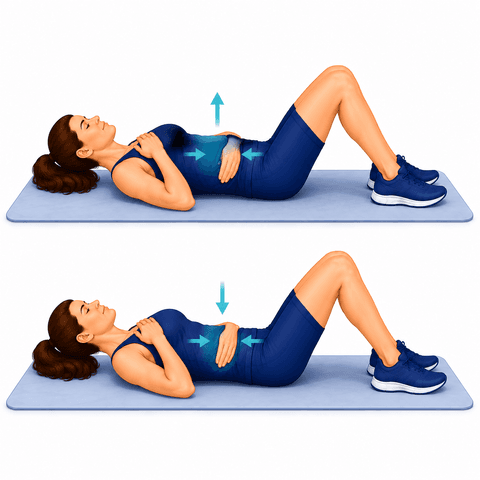
Calms the nervous system and gently wakes up your deep core without straining the back.
What it helps: Calms the nervous system and gently engages your deep core — a relaxed, supported way to start any session.
- Lie on your back, knees bent, one hand on your chest and one on your belly.
- Breathe in slowly through your nose so your belly rises while your chest stays still.
- Breathe out slowly through pursed lips, letting your belly fall.
Tips:
- Keep it relaxed — never force the breath.
- Useful any time you feel tense or sore.
Commonly done as 5–10 breaths repetitions, several times a day.
Posture Training
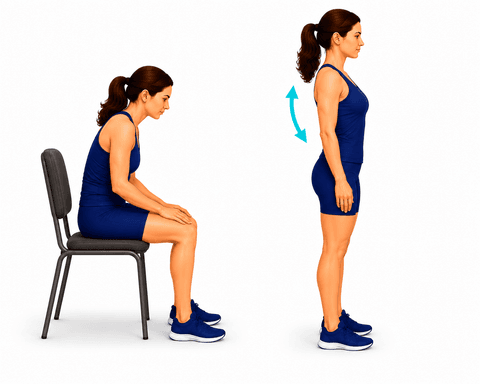
Trains a neutral spine for sitting, standing, and lifting safely.
What it helps: Trains a neutral, balanced spine for sitting, standing, and lifting — good posture takes strain off the back all day long.
- Sit or stand tall, stacking ears over shoulders over hips.
- Gently draw your shoulder blades down and back.
- Hold a tall, relaxed neutral position; reset whenever you slouch.
Tips:
- Set reminders to check your posture during the day.
- A small lumbar roll helps when sitting.
Commonly done throughout the day.
Walking Program
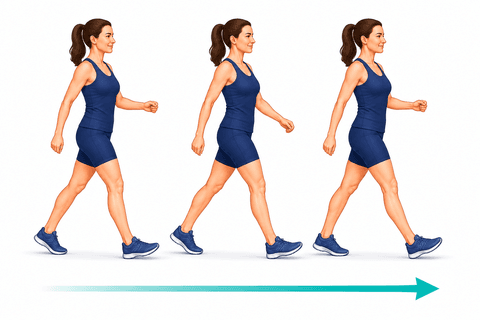
Short, frequent walks build endurance and confidence.
What it helps: Comfortable, frequent walking keeps the joints loose, builds your stamina, and rebuilds confidence on your feet. Little and often beats long and tiring.
- Take short walks at a comfortable pace.
- Increase your distance gradually as you feel able.
Tips:
- Use your assistive device as directed.
Commonly done throughout the day.
Phase 2
Chin Tucks
Activates the deep neck muscles that support and protect the cervical spine.
What it helps: Activates the deep neck muscles that support and protect the cervical spine and hold your head in good alignment.
- Sit or stand tall, looking straight ahead.
- Gently draw your chin straight back, making a "double chin" — without tilting your head up or down.
- Hold briefly, then relax.
Tips:
- Small, gentle motion — never force it.
- Imagine sliding your head back over your shoulders.
Commonly done as hold 3–5s sets of 10, several times a day.
Gentle Neck Isometrics

A steady, held press against your own hand — strengthens the neck with no movement.
What it helps: Strengthens the deep muscles that support and steady your neck without moving it — a safe, comfortable way to build the support that eases neck pain.
- Sit tall with a gentle chin-tuck. Place your palm on your forehead.
- Press your head lightly into your hand and your hand back into your head — a steady, comfortable push with NO movement of the neck.
- Hold, relax, and repeat. Do the same with the hand on the back of the head, then each side.
Tips:
- Light pressure — about 20–30% effort. This is not a strength test.
- No actual neck movement: the head stays still while the muscles work.
- Keep the gentle chin-tuck throughout.
Commonly done as 5 each direction sets of Hold 5–10 seconds, daily.
Shoulder Blade Squeezes
Strengthens the muscles between the shoulder blades to support upright posture.
What it helps: Strengthens the muscles between the shoulder blades that hold you upright and support good posture.
- Sit or stand tall with arms relaxed.
- Gently squeeze your shoulder blades together and slightly down.
- Hold briefly, then release.
Tips:
- Do not shrug your shoulders up toward your ears.
- Keep it gentle and controlled.
Commonly done as hold 3–5s sets of 10–15, a few times a day.
Upper Trap & Levator Stretch
Eases tension in the muscles that run from the neck to the shoulder.
What it helps: Loosens the tight neck-to-shoulder muscles that often build up tension and pull on the neck, easing stiffness and discomfort.
- Sit or stand tall. Gently tip one ear toward that shoulder until you feel a comfortable stretch along the opposite side of the neck.
- For the levator (back-corner of the neck), turn your nose toward your armpit and ease forward a little.
- Rest the hand on that side gently behind your head for a touch more stretch — no pulling. Switch sides.
Tips:
- Gentle and comfortable — never force the neck.
- Keep the opposite shoulder relaxed down, not hiked up.
Commonly done as 2–3 each side sets of Hold 20–30 seconds, daily.
Gentle Cervical Range of Motion
Keeps the neck moving comfortably within a gentle, pain-free range.
What it helps: Keeps the neck moving comfortably so it doesn't stiffen — within the limits your surgeon sets.
- Slowly turn your head side to side, then gently tilt one ear toward your shoulder, within a comfortable, pain-free range.
- Move smoothly and return to center.
Tips:
- Never force or push into pain.
- Your care team can guide how much neck motion is right for you.
Commonly done as 5 each direction repetitions, 1–2 times a day.
Walking Program
Short, frequent walks build endurance and confidence.
What it helps: Comfortable, frequent walking keeps the joints loose, builds your stamina, and rebuilds confidence on your feet. Little and often beats long and tiring.
- Take short walks at a comfortable pace.
- Increase your distance gradually as you feel able.
Tips:
- Use your assistive device as directed.
Commonly done throughout the day.
Phase 3
Gentle Neck Isometrics
A steady, held press against your own hand — strengthens the neck with no movement.
What it helps: Strengthens the deep muscles that support and steady your neck without moving it — a safe, comfortable way to build the support that eases neck pain.
- Sit tall with a gentle chin-tuck. Place your palm on your forehead.
- Press your head lightly into your hand and your hand back into your head — a steady, comfortable push with NO movement of the neck.
- Hold, relax, and repeat. Do the same with the hand on the back of the head, then each side.
Tips:
- Light pressure — about 20–30% effort. This is not a strength test.
- No actual neck movement: the head stays still while the muscles work.
- Keep the gentle chin-tuck throughout.
Commonly done as 5 each direction sets of Hold 5–10 seconds, daily.
Upper Back Strengthening
Strengthens the mid- and upper-back muscles that hold you upright.
What it helps: Strengthens the mid- and upper-back muscles that hold you upright and support a strong, comfortable posture.
- Perform rows, reverse flys, and scapular squeezes with a band or light weights.
- Squeeze the shoulder blades together on each rep.
- Control the return.
Tips:
- Avoid shrugging or straining the neck.
- Keep your posture tall throughout.
Commonly done as 2 sets of 12–15, 3 times a week.
Resistance Band Rows
Strengthens the upper back to support posture and the cervical spine.
What it helps: Strengthens the upper back that supports good posture and takes strain off the neck.
- Anchor a resistance band at chest height and hold an end in each hand.
- Pull your elbows back, squeezing your shoulder blades together.
- Return slowly with control.
Tips:
- Keep your neck relaxed and posture tall.
- Lead with the shoulder blades, not the neck.
Commonly done as 2 sets of 10–15, 3–4 times a week.
Shoulder Blade Squeezes
Strengthens the muscles between the shoulder blades to support upright posture.
What it helps: Strengthens the muscles between the shoulder blades that hold you upright and support good posture.
- Sit or stand tall with arms relaxed.
- Gently squeeze your shoulder blades together and slightly down.
- Hold briefly, then release.
Tips:
- Do not shrug your shoulders up toward your ears.
- Keep it gentle and controlled.
Commonly done as hold 3–5s sets of 10–15, a few times a day.
Wall Slides
Improves shoulder and upper-back mobility and posture.
What it helps: Improves shoulder and upper-back mobility and trains the posture that keeps your neck and shoulders comfortable.
- Stand with your back, head, and arms against a wall.
- Slowly slide your arms up overhead, keeping contact with the wall.
- Lower slowly back down.
Tips:
- Keep your low back and head gently against the wall.
- Only go as high as stays comfortable.
Commonly done as 2 sets of 10, daily.
Walking Program
Short, frequent walks build endurance and confidence.
What it helps: Comfortable, frequent walking keeps the joints loose, builds your stamina, and rebuilds confidence on your feet. Little and often beats long and tiring.
- Take short walks at a comfortable pace.
- Increase your distance gradually as you feel able.
Tips:
- Use your assistive device as directed.
Commonly done throughout the day.
Phase 4
Upper Back Strengthening
Strengthens the mid- and upper-back muscles that hold you upright.
What it helps: Strengthens the mid- and upper-back muscles that hold you upright and support a strong, comfortable posture.
- Perform rows, reverse flys, and scapular squeezes with a band or light weights.
- Squeeze the shoulder blades together on each rep.
- Control the return.
Tips:
- Avoid shrugging or straining the neck.
- Keep your posture tall throughout.
Commonly done as 2 sets of 12–15, 3 times a week.
Resistance Band Rows
Strengthens the upper back to support posture and the cervical spine.
What it helps: Strengthens the upper back that supports good posture and takes strain off the neck.
- Anchor a resistance band at chest height and hold an end in each hand.
- Pull your elbows back, squeezing your shoulder blades together.
- Return slowly with control.
Tips:
- Keep your neck relaxed and posture tall.
- Lead with the shoulder blades, not the neck.
Commonly done as 2 sets of 10–15, 3–4 times a week.
Progressive Strengthening
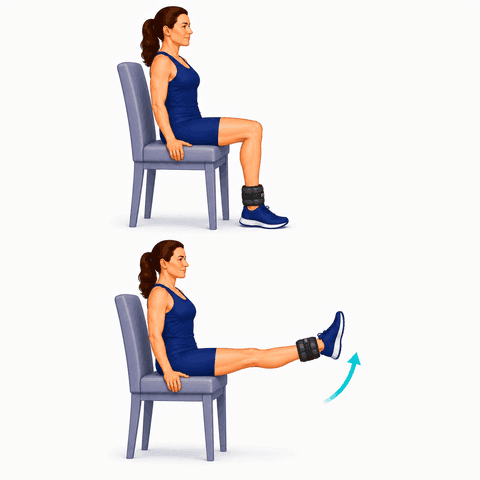
Gradually increases strength as you recover.
What it helps: Gradually raises the challenge as you get stronger, so your body keeps adapting and improving rather than plateauing.
Commonly done as directed.
Posture Training
Trains a neutral spine for sitting, standing, and lifting safely.
What it helps: Trains a neutral, balanced spine for sitting, standing, and lifting — good posture takes strain off the back all day long.
- Sit or stand tall, stacking ears over shoulders over hips.
- Gently draw your shoulder blades down and back.
- Hold a tall, relaxed neutral position; reset whenever you slouch.
Tips:
- Set reminders to check your posture during the day.
- A small lumbar roll helps when sitting.
Commonly done throughout the day.
Low-Impact Recreational Activities
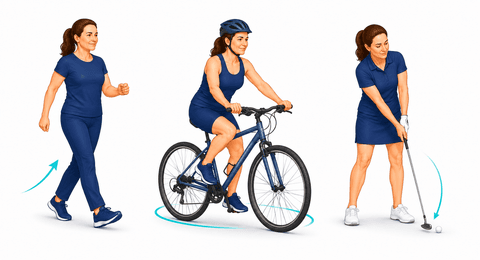
Enjoyable activities that protect your joint.
What it helps: Getting back to the activities you enjoy in ways that are kind to your joints — the whole point of building this strength.
Commonly done as you like.
Phase 5
Posture Training
Trains a neutral spine for sitting, standing, and lifting safely.
What it helps: Trains a neutral, balanced spine for sitting, standing, and lifting — good posture takes strain off the back all day long.
- Sit or stand tall, stacking ears over shoulders over hips.
- Gently draw your shoulder blades down and back.
- Hold a tall, relaxed neutral position; reset whenever you slouch.
Tips:
- Set reminders to check your posture during the day.
- A small lumbar roll helps when sitting.
Commonly done throughout the day.
Upper Back Strengthening
Strengthens the mid- and upper-back muscles that hold you upright.
What it helps: Strengthens the mid- and upper-back muscles that hold you upright and support a strong, comfortable posture.
- Perform rows, reverse flys, and scapular squeezes with a band or light weights.
- Squeeze the shoulder blades together on each rep.
- Control the return.
Tips:
- Avoid shrugging or straining the neck.
- Keep your posture tall throughout.
Commonly done as 2 sets of 12–15, 3 times a week.
Gentle Neck Isometrics
A steady, held press against your own hand — strengthens the neck with no movement.
What it helps: Strengthens the deep muscles that support and steady your neck without moving it — a safe, comfortable way to build the support that eases neck pain.
- Sit tall with a gentle chin-tuck. Place your palm on your forehead.
- Press your head lightly into your hand and your hand back into your head — a steady, comfortable push with NO movement of the neck.
- Hold, relax, and repeat. Do the same with the hand on the back of the head, then each side.
Tips:
- Light pressure — about 20–30% effort. This is not a strength test.
- No actual neck movement: the head stays still while the muscles work.
- Keep the gentle chin-tuck throughout.
Commonly done as 5 each direction sets of Hold 5–10 seconds, daily.
Walking Program
Short, frequent walks build endurance and confidence.
What it helps: Comfortable, frequent walking keeps the joints loose, builds your stamina, and rebuilds confidence on your feet. Little and often beats long and tiring.
- Take short walks at a comfortable pace.
- Increase your distance gradually as you feel able.
Tips:
- Use your assistive device as directed.
Commonly done throughout the day.
Low-Impact Recreational Activities
Enjoyable activities that protect your joint.
What it helps: Getting back to the activities you enjoy in ways that are kind to your joints — the whole point of building this strength.
Commonly done as you like.
About Cervical Strain
What the condition is, how it's usually managed, and what to expect — read the Cervical Strain guide.
Recovery reading
Browse all exercise guides · Condition guides · Recovery education library
These are general exercise guides, not a personal prescription. The repetitions and frequency shown are what's commonly used — your own surgeon or therapist may advise something different, and their guidance comes first.