JointBooklet · jointbooklet.com
Soft Tissue Biopsy (Deep) Starter Exercise Guide
A short starting program — 8 exercises drawn from the full 12-exercise program. These are the movements most people begin with.
Before you begin. This is general guidance, not a personal prescription. If your surgeon or therapist has given you a different program or different limits, follow theirs.
1. Walking Program
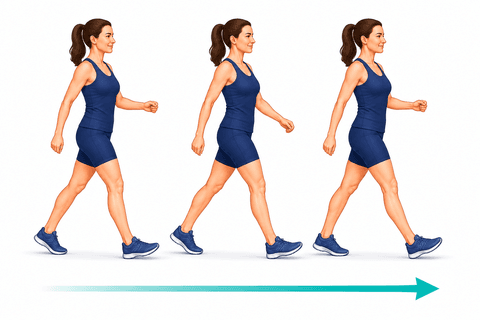
What it helps: Comfortable, frequent walking keeps the joints loose, builds your stamina, and rebuilds confidence on your feet. Little and often beats long and tiring.
How often: throughout the day.
- Take short walks at a comfortable pace.
- Increase your distance gradually as you feel able.
Tip: Use your assistive device as directed.
2. Flexibility Exercises
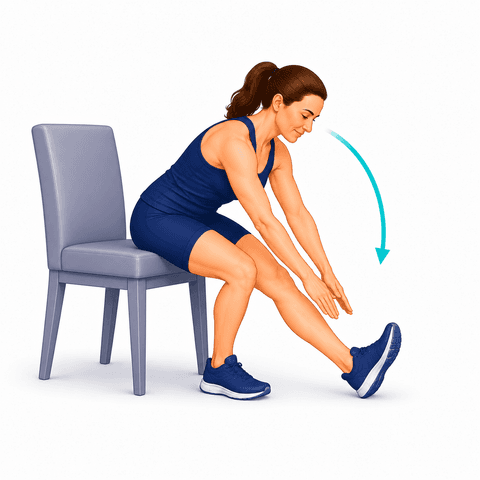
What it helps: Keeps your joints and muscles moving through a comfortable range, so you stay supple and move with ease.
How often: most days.
- Sit tall on a chair and slide one leg forward, heel on the floor and toes up.
- Hinge forward from the hips and reach gently toward that foot until you feel a stretch behind the thigh.
- Hold for around 30 seconds, breathing normally, then ease back.
- Repeat on the other side.
Tip: A stretch should feel like a long pull, never a pinch - and never bounce into it.
3. Core Activation
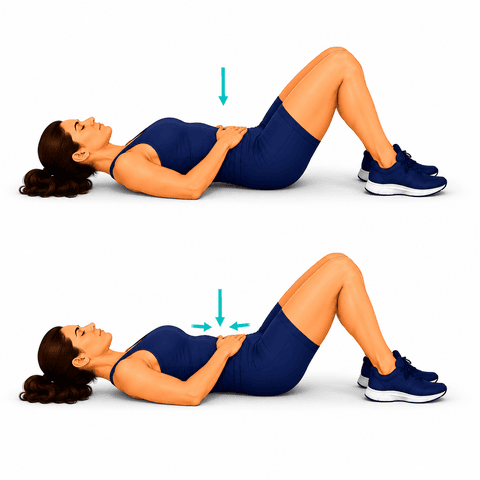
What it helps: Switches on the deep core muscles that stabilize your pelvis and spine, giving your hips a solid platform to move from.
How often: 2-3 sets of 10, daily.
- Lie or sit comfortably.
- Gently draw your belly button toward your spine.
- Hold a few seconds while breathing normally, then relax.
Tip: Avoid holding your breath.
4. Ankle Pumps
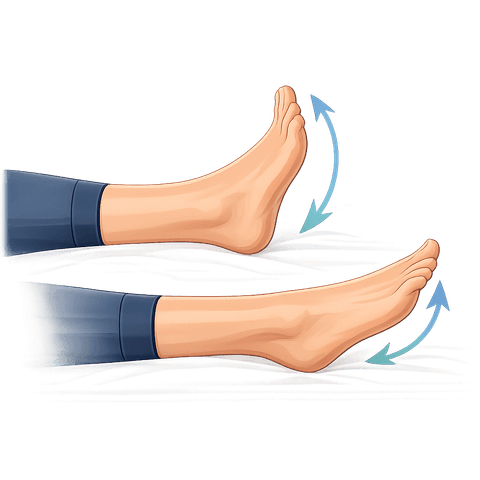
What it helps: Keeps blood moving to reduce swelling and the risk of clots while you're less active — small, frequent, and important early on.
How often: 20 repetitions, several times a day.
- Flex your foot up, pointing your toes toward the ceiling.
- Point your toes down, away from your body.
Tip: Move slowly and with control.
5. Gentle Neck Isometrics
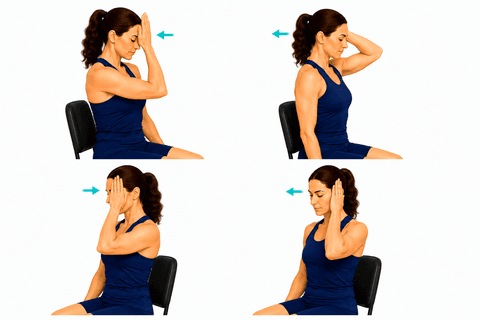
What it helps: Strengthens the deep muscles that support and steady your neck without moving it — a safe, comfortable way to build the support that eases neck pain.
How often: 5 each direction sets of Hold 5–10 seconds, daily.
- Sit tall with a gentle chin-tuck. Place your palm on your forehead.
- Press your head lightly into your hand and your hand back into your head — a steady, comfortable push with NO movement of the neck.
- Hold, relax, and repeat. Do the same with the hand on the back of the head, then each side.
Tip: Light pressure — about 20–30% effort. This is not a strength test.
6. Stationary Bike
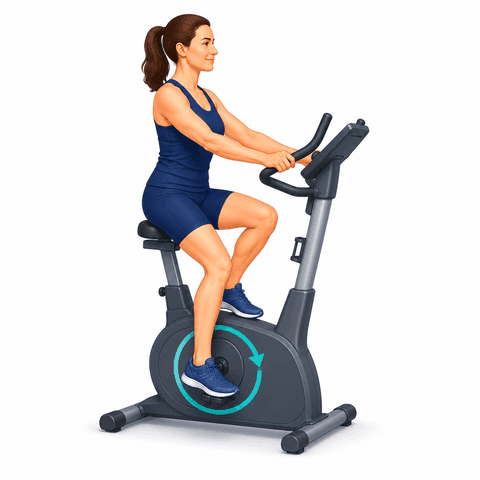
What it helps: Keeps the joints moving and nourished while you build endurance — all with no pounding. One of the gentlest ways to stay active when a joint is sore.
How often: directed.
- Set the seat so pedaling is comfortable.
- Pedal at an easy pace.
- Increase your time gradually.
7. Progressive Walking Program
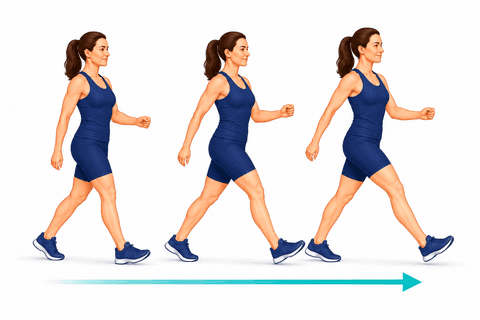
What it helps: Keep building your walking distance and pace — steady gains in endurance and confidence on your feet.
How often: daily.
- Walk on level ground at a comfortable pace, landing on the heel and rolling through the foot.
- Add a few minutes to the walk before you add speed or hills.
- Go a little further each week rather than a lot further in one day.
Tip: Turning back while you still feel good is how the distance builds.
8. Functional Strength Training
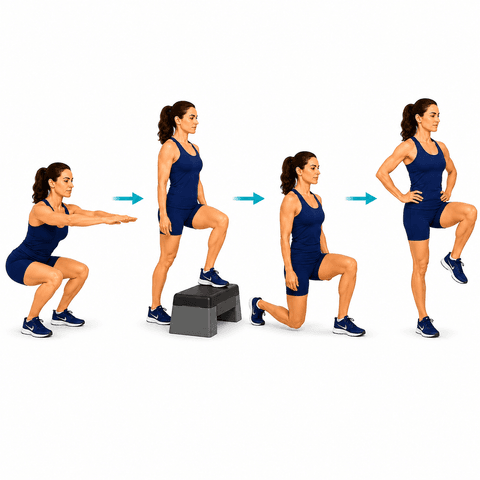
What it helps: Trains the real movements of daily life — lifting, carrying, squatting — with good mechanics, so everyday tasks feel easier.
How often: several times a week.
- Work through functional movements — squats, step-ups, lunges, and balance — as cleared.
- Add resistance gradually.
Tip: Quality of movement first, then load.
See the complete 12-exercise program, phase by phase.
What to expect in recovery
The full recovery guide for this procedure: Soft Tissue Biopsy recovery.
Recovery reading
Browse all exercise guides · Condition guides · Recovery education library
Are you a clinician? See how orthopedic practices use JointBooklet.
Are you a clinician? See how orthopedic practices use JointBooklet.
These are general exercise guides, not a personal prescription. The repetitions and frequency shown are what's commonly used — your own surgeon or therapist may advise something different, and their guidance comes first.