JointBooklet · jointbooklet.com
Shoulder Arthritis Starter Exercise Guide
A short starting program — 8 exercises drawn from the full 28-exercise program. These are the movements most people begin with.
Before you begin. This is general guidance, not a personal prescription. If your surgeon or therapist has given you a different program or different limits, follow theirs.
1. Pendulum Swings
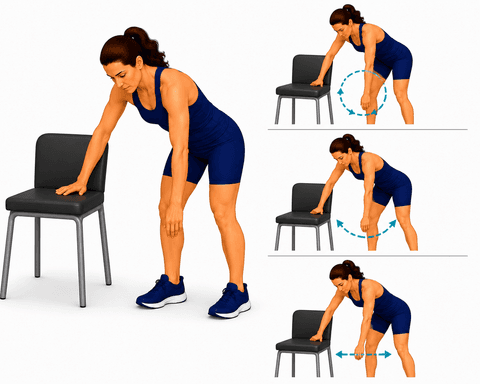
What it helps: Coaxes the shoulder through gentle motion with the muscles relaxed — keeping the joint moving and easing stiffness when active movement is still uncomfortable.
How often: 2–3 sets of 1–2 min, a few times a day.
- Lean forward and support your good arm on a table or chair, letting the sore arm hang down relaxed.
- Let the arm swing gently — small circles, then forward-and-back and side-to-side — using a gentle sway of your body, not the shoulder muscles.
- Keep it loose and pain-free, like a relaxed pendulum.
Tip: The movement comes from rocking your body, not from working the shoulder.
2. Wall Walks (Finger Walks)
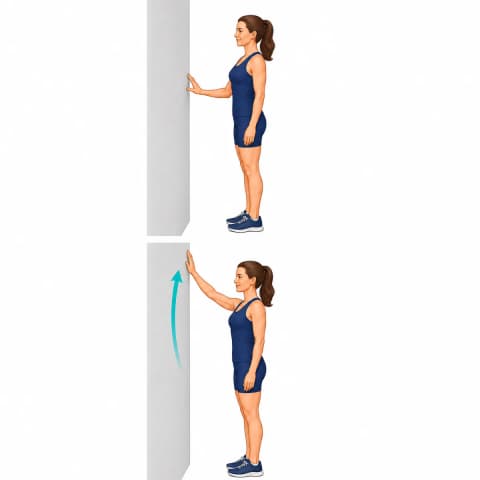
What it helps: Gradually rebuilds overhead reach with the wall sharing the arm's weight — a gentle way to recover motion when lifting the arm freely is still hard.
How often: 2 sets of 5–10, daily.
- Stand facing a wall, fingertips on it at about waist height.
- Slowly "walk" your fingers up the wall, letting the shoulder lift the arm as high as is comfortable.
- Walk back down with control. Turn side-on to the wall to work the outward direction too.
Tip: Let the wall support the arm's weight — that's the point.
3. Shoulder Flexion
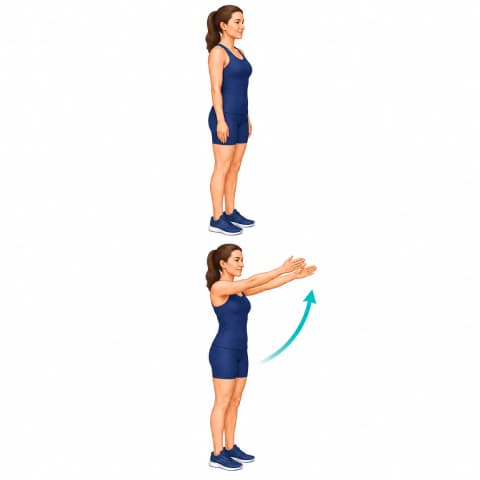
What it helps: Gently restores forward shoulder motion so you can reach overhead and use the arm in daily life.
How often: 2 sets of 10, daily.
- Stand or sit tall.
- Slowly raise one or both arms forward and up to a comfortable height.
- Lower with control.
Tip: Keep your shoulders relaxed, not shrugged.
4. Shoulder Blade Squeezes
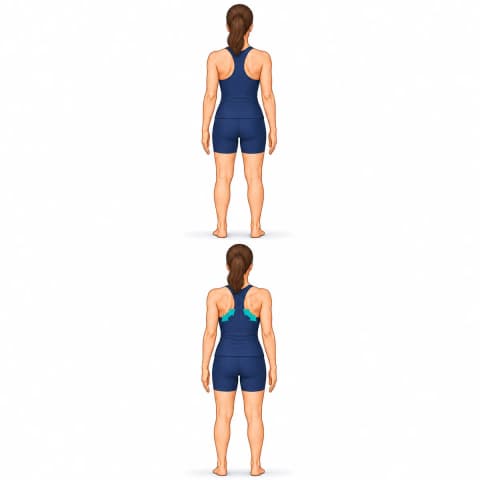
What it helps: Strengthens the muscles between the shoulder blades that hold you upright and support good posture.
How often: hold 3–5s sets of 10–15, a few times a day.
- Sit or stand tall with arms relaxed.
- Gently squeeze your shoulder blades together and slightly down.
- Hold briefly, then release.
Tip: Do not shrug your shoulders up toward your ears.
5. Posture Training
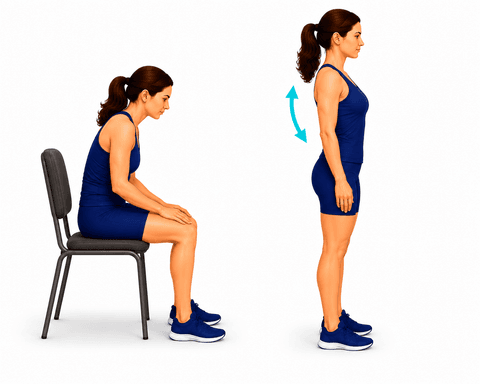
What it helps: Trains a neutral, balanced spine for sitting, standing, and lifting — good posture takes strain off the back all day long.
How often: throughout the day.
- Sit or stand tall, stacking ears over shoulders over hips.
- Gently draw your shoulder blades down and back.
- Hold a tall, relaxed neutral position; reset whenever you slouch.
Tip: Set reminders to check your posture during the day.
6. Walking Program
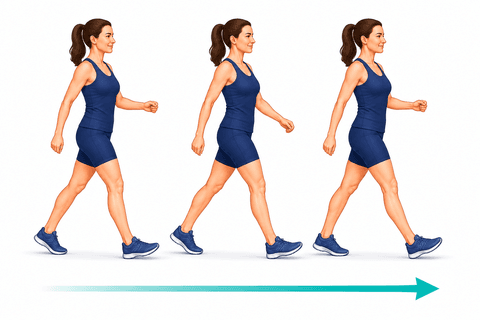
What it helps: Comfortable, frequent walking keeps the joints loose, builds your stamina, and rebuilds confidence on your feet. Little and often beats long and tiring.
How often: throughout the day.
- Take short walks at a comfortable pace.
- Increase your distance gradually as you feel able.
Tip: Use your assistive device as directed.
7. Shoulder Isometrics
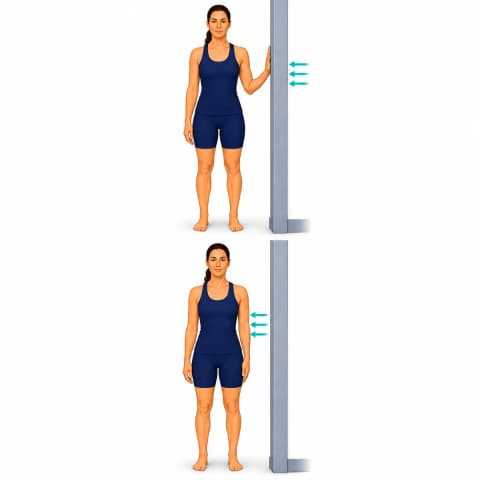
What it helps: Activates and strengthens the shoulder muscles with gentle static holds — a comfortable way to build strength early, before the joint is ready for moving resistance.
How often: 2 sets of Hold 5–10 sec ×5, most days.
- Stand beside a door frame or wall with that arm at your side.
- Bend your elbow and press the back of your hand gently into the frame. Hold steadily — nothing moves.
- Then let the arm hang straight down and press the outside of your arm into the frame the same way.
- Use light, comfortable pressure, hold, then relax.
Tip: No movement happens — you're gently pressing against something solid.
8. Cross-Body Shoulder Stretch
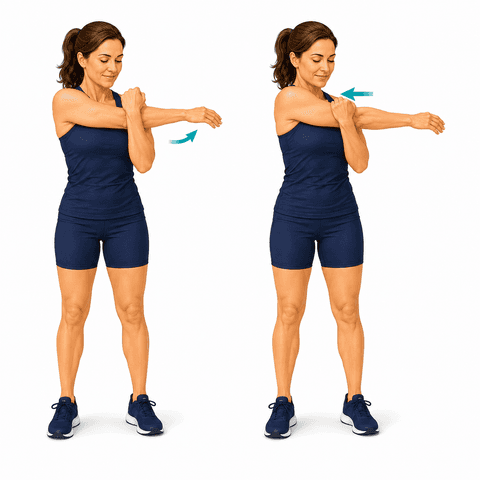
What it helps: Stretches the back and outer shoulder, easing tightness that limits reaching across the body.
How often: 3 sets of Hold 20–30 sec, daily.
- Bring the affected arm straight across the front of your body at about chest height.
- Use your other hand to gently draw it closer across your chest until you feel a comfortable stretch in the back of the shoulder.
- Hold, then release.
Tip: Keep your shoulder down and relaxed — don't shrug it up.
See the complete 28-exercise program, phase by phase.
About Shoulder Arthritis
What the condition is, how it's usually managed, and what to expect — read the Shoulder Arthritis guide.
Recovery reading
Browse all exercise guides · Condition guides · Recovery education library
Are you a clinician? See how orthopedic practices use JointBooklet.
Are you a clinician? See how orthopedic practices use JointBooklet.
These are general exercise guides, not a personal prescription. The repetitions and frequency shown are what's commonly used — your own surgeon or therapist may advise something different, and their guidance comes first.