JointBooklet · jointbooklet.com
Lumbar Hardware Removal Starter Exercise Guide
A short starting program — 8 exercises drawn from the full 45-exercise program. These are the movements most people begin with.
Before you begin. This is general guidance, not a personal prescription. If your surgeon or therapist has given you a different program or different limits, follow theirs.
1. Walking Program
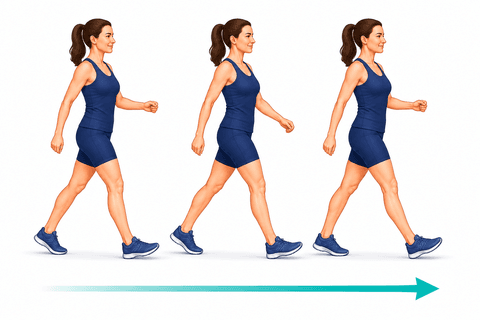
What it helps: Comfortable, frequent walking keeps the joints loose, builds your stamina, and rebuilds confidence on your feet. Little and often beats long and tiring.
How often: throughout the day.
- Take short walks at a comfortable pace.
- Increase your distance gradually as you feel able.
Tip: Use your assistive device as directed.
2. Glute Squeezes
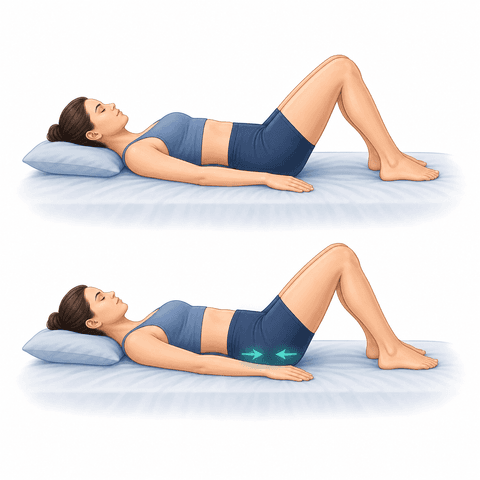
What it helps: Wakes up the glutes — the big muscles that steady and support your hip. Getting them firing again is the first step toward a hip that feels stronger and carries you with less strain on the joint.
How often: 2-3 sets of 10, a few times a day.
- Lie or sit comfortably.
- Squeeze your buttock muscles together.
- Hold a few seconds, then relax.
3. Abdominal Bracing
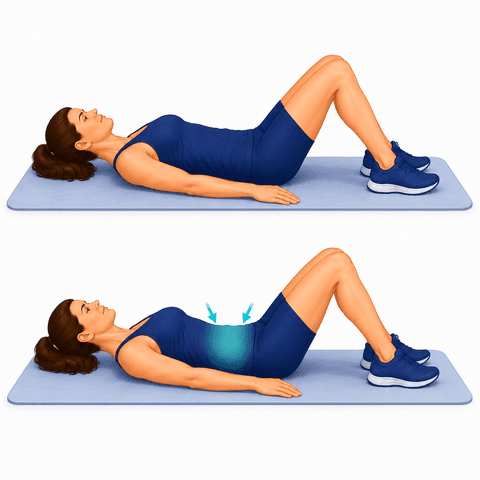
What it helps: Switches on the deep core muscles that stabilize and protect your spine through everyday movement — lifting, bending, twisting.
How often: hold 5–10s sets of 10, a few times a day.
- Lie on your back with knees bent.
- Gently tighten your stomach as if bracing for a light poke — do not suck in or hold your breath.
- Hold the light tension while breathing normally, then relax.
Tip: Aim for about 20% effort, not a maximal squeeze.
4. Posture Training
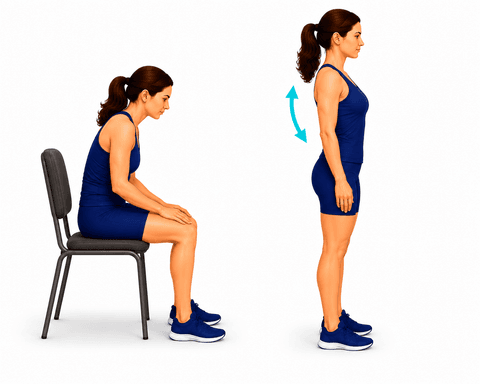
What it helps: Trains a neutral, balanced spine for sitting, standing, and lifting — good posture takes strain off the back all day long.
How often: throughout the day.
- Sit or stand tall, stacking ears over shoulders over hips.
- Gently draw your shoulder blades down and back.
- Hold a tall, relaxed neutral position; reset whenever you slouch.
Tip: Set reminders to check your posture during the day.
5. Ankle Pumps
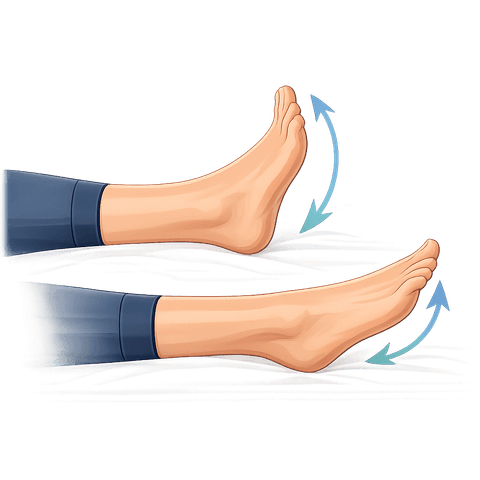
What it helps: Keeps blood moving to reduce swelling and the risk of clots while you're less active — small, frequent, and important early on.
How often: 20 repetitions, several times a day.
- Flex your foot up, pointing your toes toward the ceiling.
- Point your toes down, away from your body.
Tip: Move slowly and with control.
6. Diaphragmatic Breathing
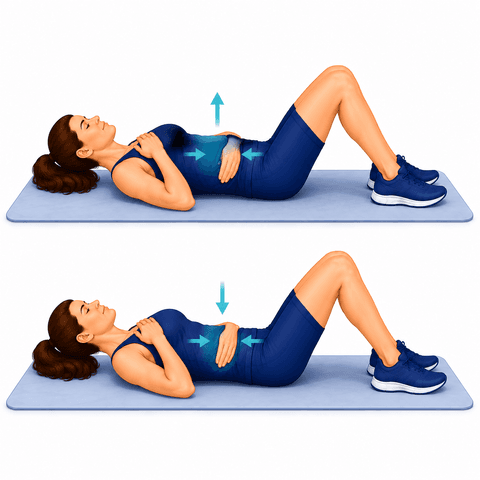
What it helps: Calms the nervous system and gently engages your deep core — a relaxed, supported way to start any session.
How often: 5–10 breaths repetitions, several times a day.
- Lie on your back, knees bent, one hand on your chest and one on your belly.
- Breathe in slowly through your nose so your belly rises while your chest stays still.
- Breathe out slowly through pursed lips, letting your belly fall.
Tip: Keep it relaxed — never force the breath.
7. Heel Slides
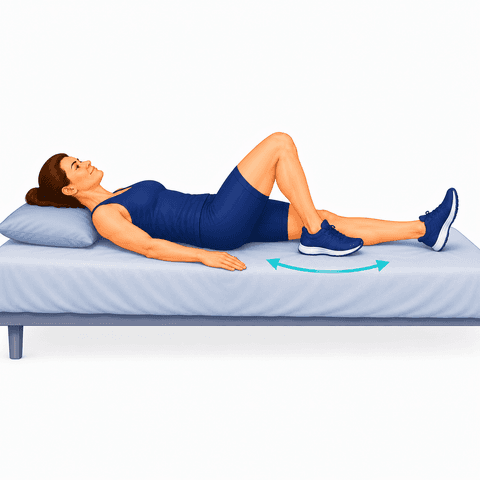
What it helps: Coaxes gentle bending back into the knee — restoring the motion you need for stairs, sitting, and getting in and out of a car.
How often: 2-3 sets of 10, a few times a day.
- Lie on your back with your legs straight.
- Slowly slide your heel toward you, bending the knee.
- Slide it back down.
Tip: Only go as far as is comfortable.
8. Gentle Nerve Glides
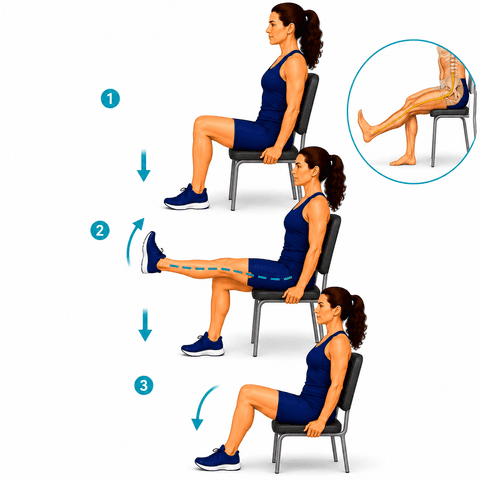
What it helps: Helps a healing nerve slide freely, which can ease leg or arm symptoms. Gentle is the rule — never push into sharp pain.
How often: 1–2 sets of 10, 1–2 times a day.
- Sit tall in a chair.
- Slowly straighten one knee while flexing your foot up, until you feel a light stretch down the leg.
- Bend the knee back down — move in and out smoothly.
Tip: Stay in a gentle, pain-free range.
See the complete 45-exercise program, phase by phase.
What to expect in recovery
The full recovery guide for this procedure: Lumbar Hardware Removal recovery.
Recovery reading
Browse all exercise guides · Condition guides · Recovery education library
Are you a clinician? See how orthopedic practices use JointBooklet.
Are you a clinician? See how orthopedic practices use JointBooklet.
These are general exercise guides, not a personal prescription. The repetitions and frequency shown are what's commonly used — your own surgeon or therapist may advise something different, and their guidance comes first.