JointBooklet · jointbooklet.com
Hip Arthroscopy with FAI Decompression Starter Exercise Guide
A short starting program — 8 exercises drawn from the full 42-exercise program. These are the movements most people begin with.
Before you begin. This is general guidance, not a personal prescription. If your surgeon or therapist has given you a different program or different limits, follow theirs.
1. Passive Hip Range of Motion (Circumduction)
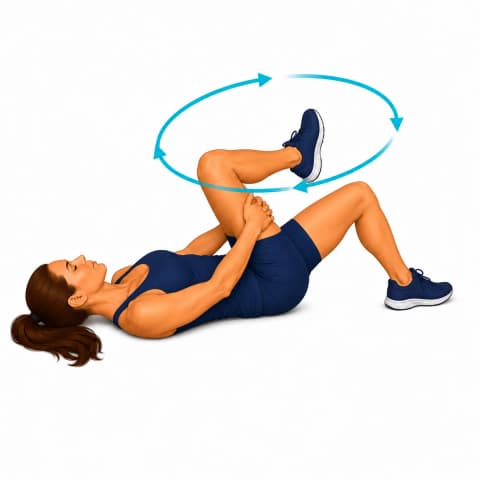
What it helps: Keeps the joint surfaces and the capsule gliding against each other after surgery, which is what prevents the internal scarring that stiffens a hip and is difficult to undo. Doing it passively means the healing tissues are moved without being loaded.
How often: 2–3 sets of 10 circles each way, several times daily.
- Lie on your back with the operated leg straight and relaxed.
- Bend the hip and knee up, using your hands behind the thigh or with a helper supporting the leg.
- Move the leg slowly in a circle — up, out to the side, around and back down — keeping the leg completely relaxed throughout.
- Circle in one direction, then reverse. Stay within the range your surgeon has allowed.
Tip: The leg is being carried, not lifted. If your hip muscles are working, the exercise is not doing its job.
2. Stationary Bike
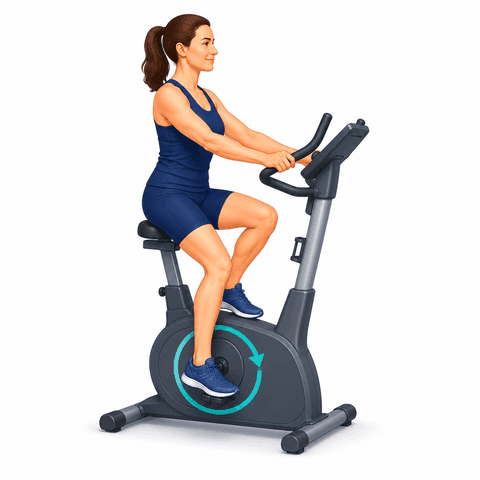
What it helps: Keeps the joints moving and nourished while you build endurance — all with no pounding. One of the gentlest ways to stay active when a joint is sore.
How often: directed.
- Set the seat so pedaling is comfortable.
- Pedal at an easy pace.
- Increase your time gradually.
3. Ankle Pumps
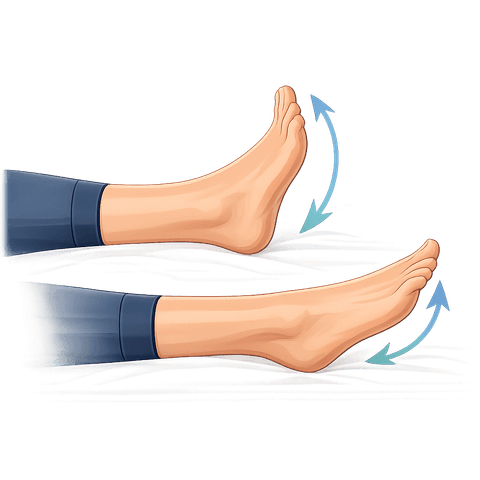
What it helps: Keeps blood moving to reduce swelling and the risk of clots while you're less active — small, frequent, and important early on.
How often: 20 repetitions, several times a day.
- Flex your foot up, pointing your toes toward the ceiling.
- Point your toes down, away from your body.
Tip: Move slowly and with control.
4. Glute Squeezes
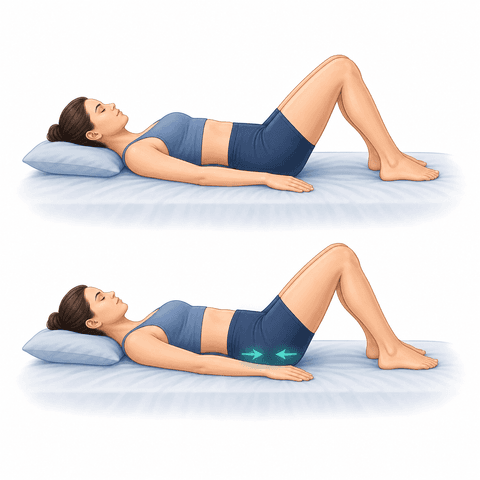
What it helps: Wakes up the glutes — the big muscles that steady and support your hip. Getting them firing again is the first step toward a hip that feels stronger and carries you with less strain on the joint.
How often: 2-3 sets of 10, a few times a day.
- Lie or sit comfortably.
- Squeeze your buttock muscles together.
- Hold a few seconds, then relax.
5. Walking Program
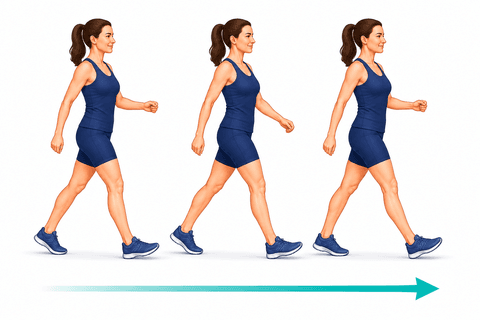
What it helps: Comfortable, frequent walking keeps the joints loose, builds your stamina, and rebuilds confidence on your feet. Little and often beats long and tiring.
How often: throughout the day.
- Take short walks at a comfortable pace.
- Increase your distance gradually as you feel able.
Tip: Use your assistive device as directed.
6. Quad Sets
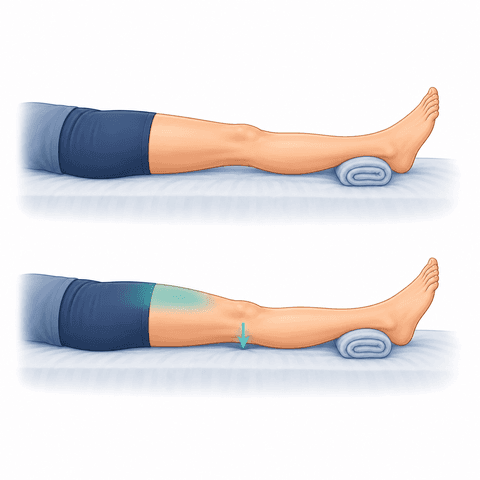
What it helps: Wakes up the quadriceps — the big thigh muscles that support and control your knee. Getting them firing is the foundation of a strong, steady leg.
How often: 2-3 sets of 10, a few times a day.
- Sit or lie with your leg straight.
- Tighten the muscle on top of your thigh, pressing the back of your knee down.
- Hold briefly, then relax.
7. Heel Slides
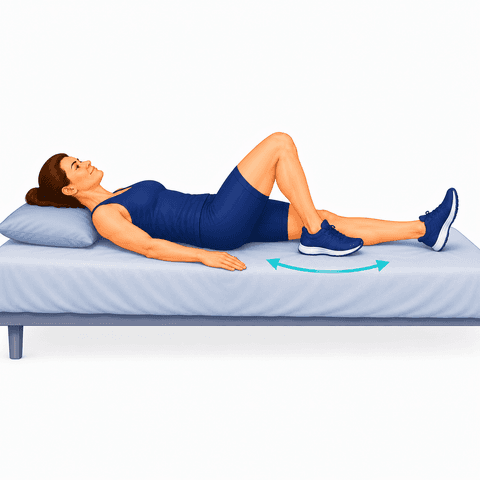
What it helps: Coaxes gentle bending back into the knee — restoring the motion you need for stairs, sitting, and getting in and out of a car.
How often: 2-3 sets of 10, a few times a day.
- Lie on your back with your legs straight.
- Slowly slide your heel toward you, bending the knee.
- Slide it back down.
Tip: Only go as far as is comfortable.
8. Isometric Hip Abduction
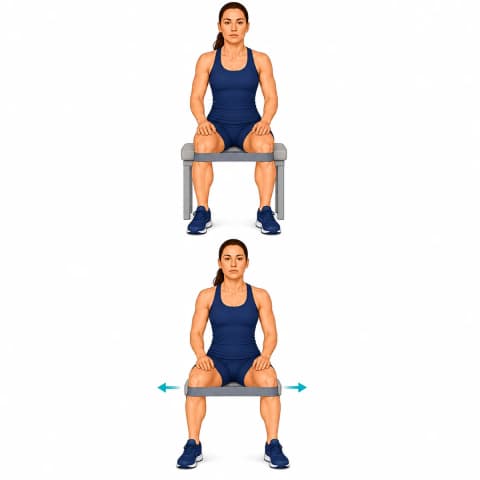
What it helps: Holding a steady contraction loads the side-hip tendons gently — it often eases pain while it begins rebuilding their strength. A calm, controlled first step before adding moving loads.
How often: 4–5 holds sets of Hold 30–45 seconds, daily.
- Sit tall (or lie on your back) with a looped band around the outside of your knees — or simply use your hands on the outside of your knees for resistance.
- Press your knees gently outward against the band or your hands.
- Hold a firm but comfortable push — steady, no movement — then slowly relax.
- Rest a moment and repeat.
Tip: You should feel the muscles on the side of the hip working — not your hip pain. Ease the effort if it provokes the sore spot.
See the complete 42-exercise program, phase by phase.
What to expect in recovery
The full recovery guide for this procedure: Hip Arthroscopy (FAI Decompression) recovery.
Recovery reading
Browse all exercise guides · Condition guides · Recovery education library
Are you a clinician? See how orthopedic practices use JointBooklet.
Are you a clinician? See how orthopedic practices use JointBooklet.
These are general exercise guides, not a personal prescription. The repetitions and frequency shown are what's commonly used — your own surgeon or therapist may advise something different, and their guidance comes first.