JointBooklet · jointbooklet.com
Chronic Ankle Instability Starter Exercise Guide
A short starting program — 8 exercises drawn from the full 25-exercise program. These are the movements most people begin with.
Before you begin. This is general guidance, not a personal prescription. If your surgeon or therapist has given you a different program or different limits, follow theirs.
1. Resistance Band Ankle Eversion & Inversion
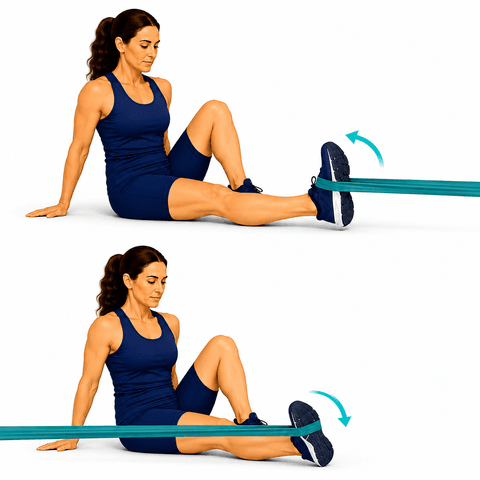
What it helps: Strengthens the muscles that turn the foot in and out — the side-to-side stabilizers that protect the ankle from rolling and keep it steady on uneven ground.
How often: 2–3 sets of 12–15 each, most days.
- Sit with a resistance band looped around the foot. For eversion: anchor the band on the inner side and turn the sole outward against it, then return slowly.
- For inversion: anchor on the outer side and turn the sole inward against the band.
- Keep the lower leg still — the motion is at the ankle and foot.
Tip: Controlled, light resistance.
2. Single-Leg Balance
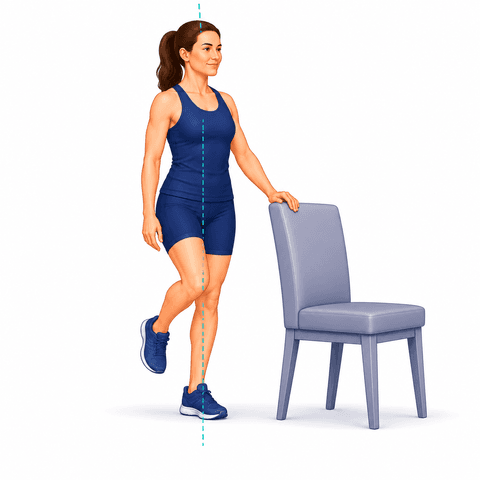
What it helps: Trains your hip and leg to stay steady when all your weight is on one side — which is most of walking. Better balance means a surer, more confident step.
How often: daily.
- Stand near a counter for safety.
- Lift one foot and balance on the other leg.
- Hold as able.
Tip: Holding the counter with one or both hands still counts. Letting go comes later, if it comes at all.
3. Gentle Ankle Range of Motion
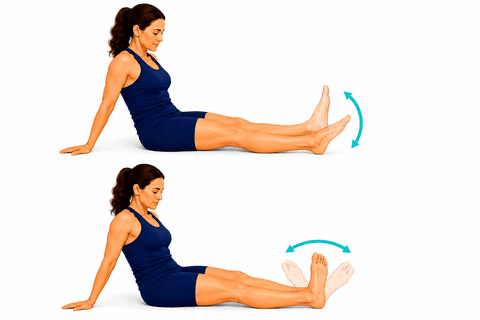
What it helps: Eases motion back into the ankle so it stays supple, within the limits your surgeon sets.
How often: 2-3 sets of 10, as directed.
- Seated, slowly point your foot down and bring it back toward neutral.
- Gently move the foot side to side.
Tip: Stay within a comfortable, pain-free range — avoid forcing the foot.
4. Balance & Proprioception Drills
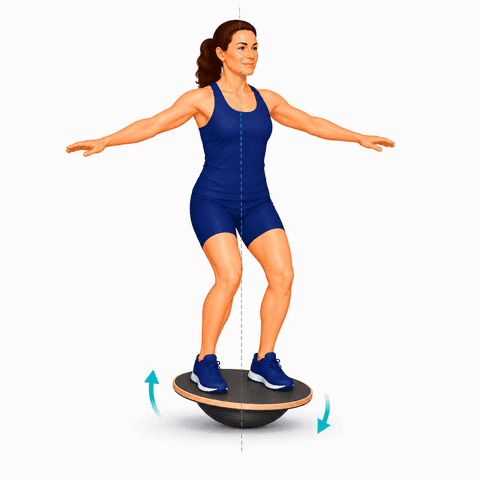
What it helps: Sharpens your sense of where your joints are in space — the control that keeps you steady and prevents missteps.
How often: a few times a week.
- Step onto a wobble board with your feet either side of the centre, near a counter you can reach.
- Bring the board level and hold it there - the work is in the small corrections.
- Then tip it slowly side to side, and forward and back, under control.
- Step off and rest before repeating.
Tip: A wobble board tips under you; a balance pad only gives. That is what makes this the harder of the two, and it is worth being steady on the pad first.
5. Walking Program
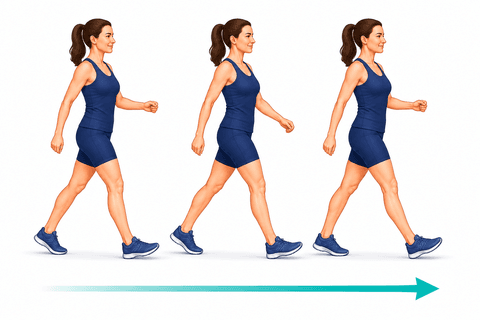
What it helps: Comfortable, frequent walking keeps the joints loose, builds your stamina, and rebuilds confidence on your feet. Little and often beats long and tiring.
How often: throughout the day.
- Take short walks at a comfortable pace.
- Increase your distance gradually as you feel able.
Tip: Use your assistive device as directed.
6. Balance Board Training
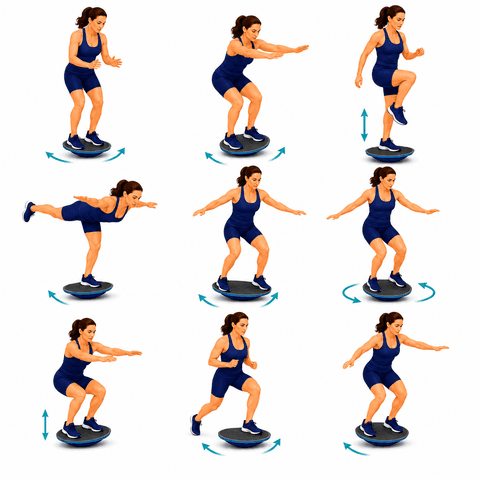
What it helps: Challenges the ankle to react and steady itself on an unstable surface — the control that helps prevent rolls and falls.
How often: 2-3 sets, several times a week.
- Stand near a counter for support and place both feet on a balance or wobble board.
- Slowly tilt the board forward, back, and side to side under control.
- Progress toward more movement as your steadiness improves.
Tip: Keep a hand or fingertip on support until you feel secure.
7. Heel Raises
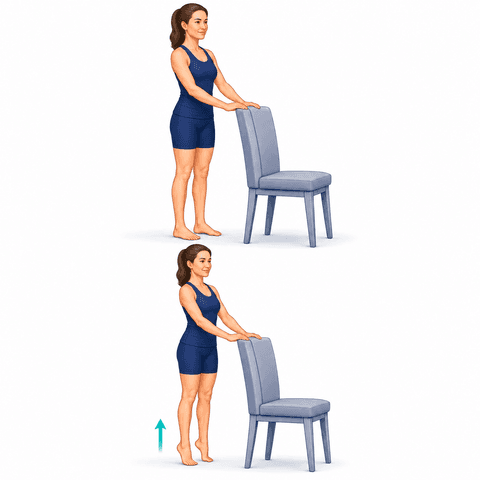
What it helps: Strengthens the calf and steadies your balance, rebuilding the push-off that drives walking.
How often: 2-3 sets of 10-15, once or twice a day.
- Stand holding a counter.
- Rise up onto your toes.
- Lower slowly.
8. Single-Leg Balance on Foam
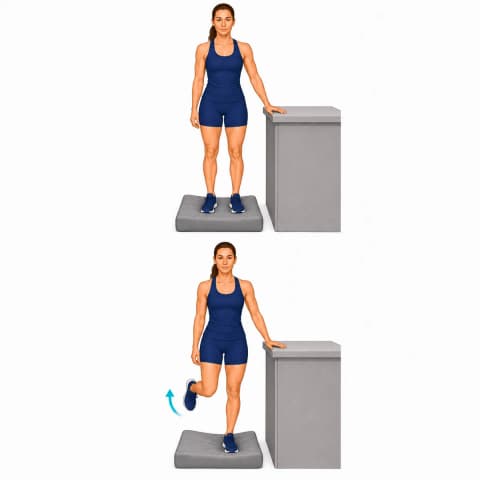
What it helps: Challenges your ankle and leg to stay steady on a soft surface, sharpening the reflexes that keep you sure-footed.
How often: 3 sets, several times a week.
- Stand on a foam pad or cushion near a counter for support.
- Lift the other foot and balance on the surgical leg.
- Hold with control, then rest.
Tip: Keep support nearby — build up your time as balance improves.
See the complete 25-exercise program, phase by phase.
About Chronic Ankle Instability
What the condition is, how it's usually managed, and what to expect — read the Chronic Ankle Instability guide.
Recovery reading
Browse all exercise guides · Condition guides · Recovery education library
Are you a clinician? See how orthopedic practices use JointBooklet.
Are you a clinician? See how orthopedic practices use JointBooklet.
These are general exercise guides, not a personal prescription. The repetitions and frequency shown are what's commonly used — your own surgeon or therapist may advise something different, and their guidance comes first.