Achilles Tendon Reconstruction Exercise Guide
A phase-by-phase exercise program used in recovery for achilles tendon reconstruction. Each movement includes what it's working on and how it's typically performed. Your own surgeon's or therapist's guidance always comes first.
Phase 1
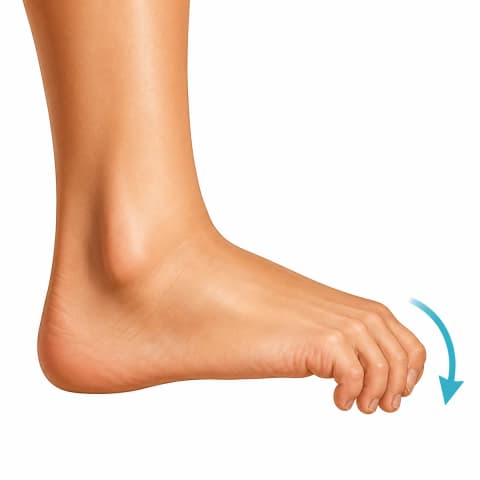
Toe Flexion & Extension
Keeps the toes moving and blood flowing while the ankle is protected.
What it helps: Keeps the toes moving and the blood flowing while the foot heals.
- Curl your toes downward, then straighten and spread them upward.
- Move only the toes — keep your ankle still in the boot or cast.
Tips:
- A gentle way to stay active in the first weeks.
Commonly done as 15-20 repetitions, a few times a day.
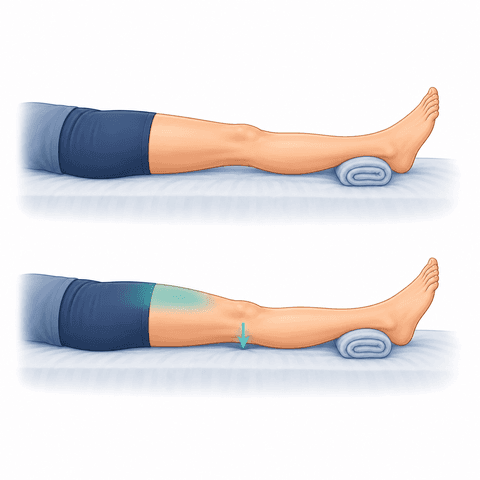
Quad Sets

Re-activates the thigh muscle and supports knee control.
What it helps: Wakes up the quadriceps — the big thigh muscles that support and control your knee. Getting them firing is the foundation of a strong, steady leg.
- Sit or lie with your leg straight.
- Tighten the muscle on top of your thigh, pressing the back of your knee down.
- Hold briefly, then relax.
Commonly done as 2-3 sets of 10, a few times a day.
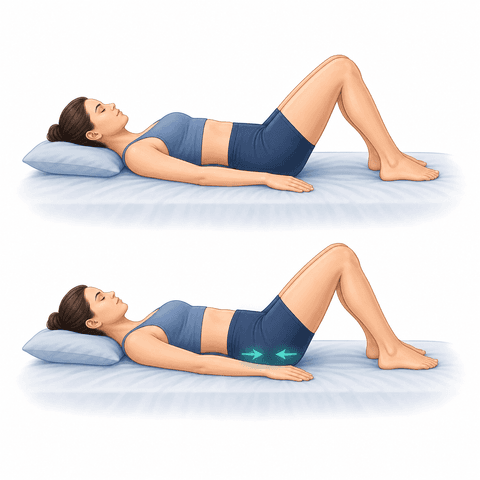
Glute Squeezes

Gently re-engages the buttock muscles.
What it helps: Wakes up the glutes — the big muscles that steady and support your hip. Getting them firing again is the first step toward a hip that feels stronger and carries you with less strain on the joint.
- Lie or sit comfortably.
- Squeeze your buttock muscles together.
- Hold a few seconds, then relax.
Commonly done as 2-3 sets of 10, a few times a day.
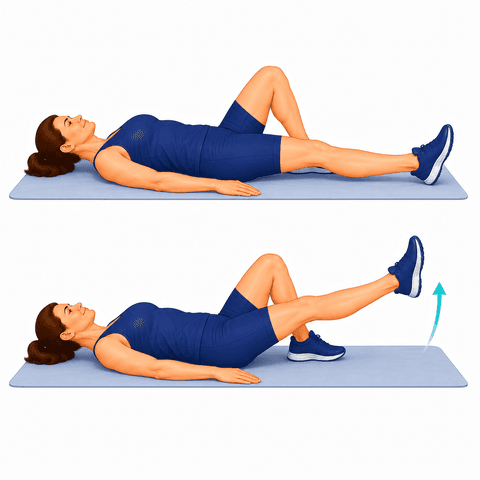
Straight Leg Raises

Strengthens the thigh while protecting the joint.
What it helps: Builds quad and hip strength while the knee stays straight, so the muscle works hard without stressing the joint.
- Lie down with one leg bent and the other straight.
- Tighten your thigh and lift the straight leg a few inches.
- Lower slowly.
Tips:
- Keep the knee straight as you lift.
Commonly done as 2-3 sets of 10, once or twice a day.
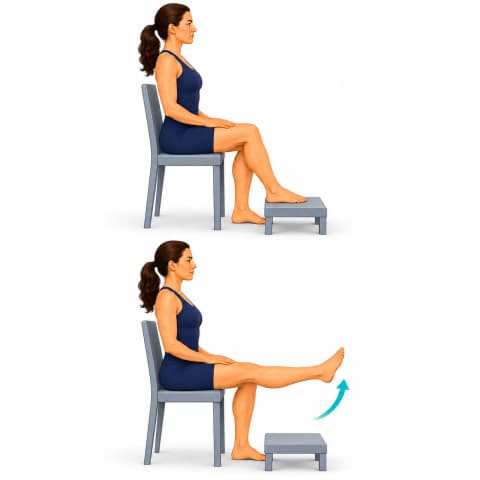
Seated Knee Extensions
Keeps the thigh strong while you stay off the foot.
What it helps: Keeps the thigh strong and the knee straightening well while you stay off your feet.
- Sit in a chair with your foot supported.
- Straighten your knee, lifting the lower leg.
- Lower slowly.
Tips:
- Keep the movement at the knee, not the ankle.
Commonly done as 2-3 sets of 10, once or twice a day.
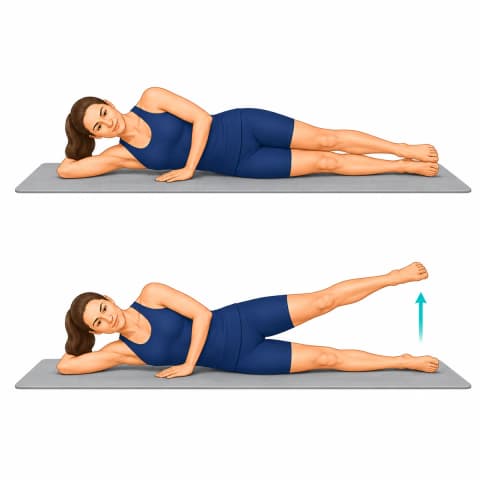
Hip Abduction
Strengthens the outer hip while you stay off the foot.
What it helps: Strengthens the outer-hip muscles that keep your hip level and steady — strength you can build without putting any weight through your healing foot.
- Lie on your side with the surgical leg on top, legs straight.
- Lift the top leg upward a comfortable distance, keeping it in line with your body.
- Lower slowly.
Tips:
- Keep your toes pointing forward, not up toward the ceiling.
Commonly done as 2-3 sets of 10, daily.
Hip Extension
Strengthens the back of the hip and buttock without loading the ankle.
What it helps: Strengthens the glutes and the muscles behind the hip that power each step — built while staying off the foot.
- Lie on your stomach, or stand holding a counter for support.
- Keeping your leg straight, lift it gently backward.
- Lower slowly.
Tips:
- Move from the hip and avoid arching your low back.
Commonly done as 2-3 sets of 10, daily.
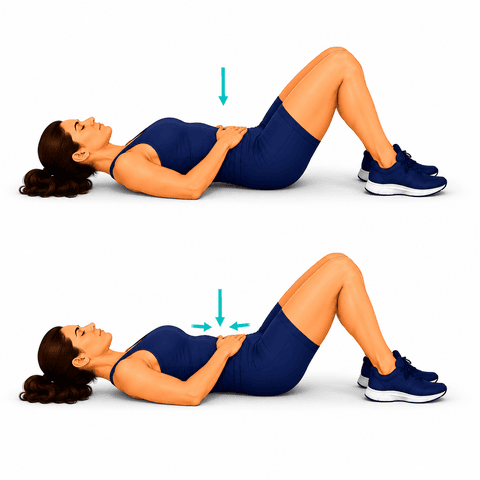
Core Activation

Gentle core engagement to support posture and balance while you recover.
What it helps: Switches on the deep core muscles that stabilize your pelvis and spine, giving your hips a solid platform to move from.
- Lie or sit comfortably.
- Gently draw your belly button toward your spine.
- Hold a few seconds while breathing normally, then relax.
Tips:
- Avoid holding your breath.
Commonly done as 2-3 sets of 10, daily.
Walking with Assistive Device & Boot
Short, protected walking in your boot or cast with crutches or a walker.
What it helps: Short, protected walking in your boot with crutches or a walker — safe, gradual time back on your feet.
- Use your crutches, walker, or knee scooter as directed.
- Bear weight only as your surgeon allows.
- Take short, level walks.
Tips:
- Follow your weight-bearing instructions closely in the early weeks.
Commonly done throughout the day.
Phase 2
Gentle Ankle Range of Motion

Keeps the ankle moving comfortably to restore gentle motion.
What it helps: Eases motion back into the ankle so it stays supple, within the limits your surgeon sets.
- Seated, slowly point your foot down and bring it back toward neutral.
- Gently move the foot side to side.
Tips:
- Stay within a comfortable, pain-free range — avoid forcing the foot.
- Your care team can guide how much ankle motion is right for your recovery.
Commonly done as 2-3 sets of 10, as directed.
Ankle Alphabet

Traces the alphabet with the foot to restore ankle motion in every direction.
What it helps: Moves the ankle through its full range while you trace each letter — restoring motion in every direction.
- With the leg supported, slowly "draw" each letter of the alphabet using your big toe.
- Move from the ankle, keeping the leg still.
Tips:
- Move within a comfortable, pain-free range.
Commonly done as 1-2 sets of A–Z, a few times a day.
Toe Raises & Toe Curls
Re-activates the small muscles of the foot.
What it helps: Re-activates the small muscles of the foot that support your arch and balance.
- Seated with your foot flat, lift your toes up while keeping the heel down.
- Then curl the toes down, as if gripping a towel.
Tips:
- A towel under the foot adds a gentle challenge.
Commonly done as 2 sets of 15, daily.
Seated Heel Raises
Gently activates the calf while seated and protected.
What it helps: Gently activates the calf while seated and protected — an early step toward push-off strength.
- Sit with your feet flat on the floor.
- Lift your heels, rising onto the balls of your feet.
- Lower slowly.
Tips:
- Keep the weight comfortable across the foot.
Commonly done as 2 sets of 10-15, daily.
Stationary Bike

Builds motion and endurance with low impact.
What it helps: Keeps the joints moving and nourished while you build endurance — all with no pounding. One of the gentlest ways to stay active when a joint is sore.
- Set the seat so pedaling is comfortable.
- Pedal at an easy pace.
- Increase your time gradually.
Commonly done as directed.
Standing Hip Abduction

Strengthens the muscles on the side of the hip.
What it helps: Strengthens the outer-hip muscles that hold you steady whenever you're on one leg — which is every step you take. Stronger here, steadier hip.
- Stand holding a counter for support.
- Lift your leg out to the side, keeping it straight.
- Lower slowly.
Tips:
- Keep your toes pointing forward.
Commonly done as 2-3 sets of 10-15, 1-2x daily.
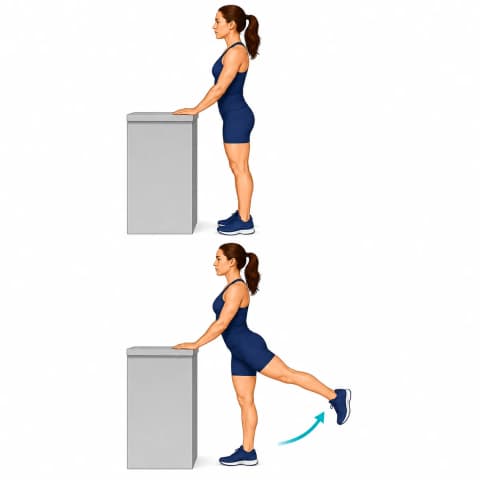
Standing Hip Extension

Strengthens the muscles behind the hip.
What it helps: Strengthens the muscles behind the hip that power you forward with each step and help you stand tall — the engine of a strong, even stride.
- Stand holding a counter.
- Move your leg straight back without arching your back.
- Lower slowly.
Commonly done as 2-3 sets of 10-15, 1-2x daily.
Core Strengthening

Supports posture and overall stability.
What it helps: Builds the core that holds your trunk steady, supporting your posture, your back, and everything you do on your feet.
- Perform gentle core exercises as directed.
Commonly done a few times a week.
Phase 3
Walking Program

Short, frequent walks build endurance and confidence.
What it helps: Comfortable, frequent walking keeps the joints loose, builds your stamina, and rebuilds confidence on your feet. Little and often beats long and tiring.
- Take short walks at a comfortable pace.
- Increase your distance gradually as you feel able.
Tips:
- Use your assistive device as directed.
Commonly done throughout the day.
Double-Leg Heel Raises

Begins rebuilding calf strength using both legs together.
What it helps: Begins rebuilding calf strength using both legs together to share the load.
- Stand holding a counter for support.
- Rise up onto the balls of both feet.
- Lower slowly with control.
Tips:
- Share the load across both feet at first.
Commonly done as 2-3 sets of 10-15, daily.
Mini Squats

Builds leg strength through a comfortable range.
What it helps: Builds hip and leg strength through a comfortable range, so everyday moves — sitting, standing, bending — take less out of your joints.
- Stand holding a counter.
- Bend your knees a small amount, keeping them behind your toes.
- Return to standing.
Commonly done as 2-3 sets of 10, once or twice a day.
Sit-to-Stand

Builds the strength and confidence to rise from a chair.
What it helps: Trains the exact strength you use to rise from a chair, a toilet, or a car. Stronger here means more independence and less of a struggle on tough days.
- Sit at the edge of a sturdy chair.
- Lean slightly forward and stand up.
- Lower yourself back down with control.
Tips:
- Use your arms for support as needed.
Commonly done as 2-3 sets of 8-10, once or twice a day.
Step-Ups

Builds strength for stairs and daily activity.
What it helps: Builds the leg and hip strength — and the control — for stairs, curbs, and everyday activity.
- Step up onto a low step with your operative leg.
- Step back down with control.
Tips:
- Hold a rail for balance.
Commonly done as 2-3 sets of 10, once or twice a day.
Resistance Band Ankle Strengthening
Strengthens the ankle in all directions with a band.
What it helps: Strengthens the ankle in every direction with a band, building the all-around support that steadies each step.
- Loop a resistance band around your foot.
- Push down, pull up, and turn the foot in and out against the band.
Tips:
- Move slowly and keep the motion controlled.
Commonly done as 2-3 sets of 10-15, daily.
Single-Leg Weight Shifts
Builds confidence putting weight through the new ankle joint.
What it helps: Builds confidence loading one leg fully — an early step toward steady single-leg standing and walking.
- Stand holding a counter for support, feet hip-width apart.
- Slowly shift your weight toward the surgical side, then back to center.
- Progress to holding more weight on that side as comfort allows.
Tips:
- Keep support nearby and let comfort guide how much weight you shift.
Commonly done as 2-3 sets of 10, daily.
Balance Training

Ongoing balance work for steady movement.
What it helps: Sharpens your steadiness and reactions so you move with confidence and lower your risk of a fall — protecting the progress you've made.
Commonly done a few times a week.
Stationary Bike

Builds motion and endurance with low impact.
What it helps: Keeps the joints moving and nourished while you build endurance — all with no pounding. One of the gentlest ways to stay active when a joint is sore.
- Set the seat so pedaling is comfortable.
- Pedal at an easy pace.
- Increase your time gradually.
Commonly done as directed.
Standing Weight Shifts
Builds comfort bearing weight evenly through both feet.
What it helps: Gently retrains you to load each leg evenly and confidently — the first step back to steady, balanced walking.
- Stand holding a counter, feet hip-width apart.
- Slowly shift your weight from one foot to the other.
- Keep the movement smooth and controlled.
Tips:
- Let comfort guide how much weight you shift onto the surgical side.
Commonly done as 2-3 sets of 10, daily.
Phase 4
Progressive Walking Program

Keep building your walking distance and pace.
What it helps: Keep building your walking distance and pace — steady gains in endurance and confidence on your feet.
Commonly done daily.
Single-Leg Heel Raises
A key strength milestone — calf raises on the surgical leg alone.
What it helps: Calf strength on one leg — a milestone that means the ankle can power a normal step on its own.
- Stand holding a counter for balance.
- Rise onto the ball of your surgical foot only.
- Lower slowly.
Tips:
- Build repetitions gradually — this strength often returns slowly.
Commonly done as 2-3 sets of 8-12, daily.
Cycling

Low-impact endurance and motion.
What it helps: Low-impact endurance that keeps the joints moving smoothly while you build fitness — easy on the body, good for the long run.
Commonly done as able.
Elliptical Trainer

Low-impact cardio that is easy on the joints.
What it helps: Low-impact cardio that builds endurance and keeps the legs moving while staying easy on the joints.
Commonly done as able.
Swimming

Low-impact, full-body conditioning.
What it helps: Full-body conditioning with the water carrying your weight, so your muscles work hard with almost no load on the joints.
Commonly done as able.
Single-Leg Balance

Improves balance and stability.
What it helps: Trains your hip and leg to stay steady when all your weight is on one side — which is most of walking. Better balance means a surer, more confident step.
- Stand near a counter for safety.
- Lift one foot and balance on the other leg.
- Hold as able.
Commonly done daily.
Lateral Step-Ups
Strengthens the leg and ankle with controlled side-to-side stepping.
What it helps: Strengthens the leg and ankle with controlled side-to-side stepping, building stability in every direction.
- Stand beside a low step.
- Step up sideways onto the step with the surgical leg, then lower slowly.
- Keep your knee tracking over your foot.
Tips:
- Start with a low step and progress the height gradually.
Commonly done as 2-3 sets of 8-12, daily.
Functional Strength Training

Task-based strengthening that rebuilds the movements of daily life and activity.
What it helps: Trains the real movements of daily life — lifting, carrying, squatting — with good mechanics, so everyday tasks feel easier.
- Work through functional movements — squats, step-ups, lunges, and balance — as cleared.
- Add resistance gradually.
Tips:
- Quality of movement first, then load.
Commonly done several times a week.
Balance & Proprioception Drills

Sharpens balance and joint awareness.
What it helps: Sharpens your sense of where your joints are in space — the control that keeps you steady and prevents missteps.
Commonly done a few times a week.
Phase 5
Walking Program

Short, frequent walks build endurance and confidence.
What it helps: Comfortable, frequent walking keeps the joints loose, builds your stamina, and rebuilds confidence on your feet. Little and often beats long and tiring.
- Take short walks at a comfortable pace.
- Increase your distance gradually as you feel able.
Tips:
- Use your assistive device as directed.
Commonly done throughout the day.
Cycling

Low-impact endurance and motion.
What it helps: Low-impact endurance that keeps the joints moving smoothly while you build fitness — easy on the body, good for the long run.
Commonly done as able.
Swimming

Low-impact, full-body conditioning.
What it helps: Full-body conditioning with the water carrying your weight, so your muscles work hard with almost no load on the joints.
Commonly done as able.
Strength Training

Maintains and builds long-term strength.
What it helps: Builds and maintains long-term strength to keep you active, resilient, and independent.
Commonly done a few times a week.
Single-Leg Heel Raises
A key strength milestone — calf raises on the surgical leg alone.
What it helps: Calf strength on one leg — a milestone that means the ankle can power a normal step on its own.
- Stand holding a counter for balance.
- Rise onto the ball of your surgical foot only.
- Lower slowly.
Tips:
- Build repetitions gradually — this strength often returns slowly.
Commonly done as 2-3 sets of 8-12, daily.
Balance Exercises

General balance work to steady your gait.
What it helps: Steadies your gait and sharpens your balance, helping you move with confidence.
- Practice standing balance near support.
- Progress as you feel steady.
Commonly done daily.
Plyometric Progression

Gradual hopping and jumping work to rebuild power and spring.
What it helps: Gradual hopping and jumping that rebuilds power and spring — and trains your legs to absorb landing forces safely.
- Begin with small, two-foot hops.
- Progress toward single-leg and directional hops as able.
Tips:
- Favor quality and control over height or speed.
Commonly done as cleared.
Hiking
Walking on trails and varied terrain as endurance and confidence return.
What it helps: Walking varied terrain builds endurance, balance, and confidence as you return to the outdoors.
- Start with short, flat trails.
- Build distance and add gentle inclines as comfort allows.
Tips:
- Supportive footwear and trekking poles can help early on.
Commonly done as cleared.
Return to Recreational Activities
Easing back into the hobbies and activities you enjoy.
What it helps: Easing back into the sports and activities you love, at a pace your body is ready for — the reward for the strength you've built.
- Reintroduce low-impact activities you enjoy, as cleared by your surgeon.
- Start with shorter sessions and build duration and intensity gradually.
- Listen to your body and progress steadily.
Tips:
- Ramp up gradually — avoid sudden big efforts.
- A flare after activity means ease back, not stop entirely.
Commonly done as tolerated.
Recovery reading
Browse all exercise guides · Condition guides · Recovery education library
These are general exercise guides, not a personal prescription. The repetitions and frequency shown are what's commonly used — your own surgeon or therapist may advise something different, and their guidance comes first.