JointBooklet · jointbooklet.com
Hip Impingement (FAI) Starter Exercise Guide
A short starting program — 8 exercises drawn from the full 32-exercise program. These are the movements most people begin with.
Before you begin. This is general guidance, not a personal prescription. If your surgeon or therapist has given you a different program or different limits, follow theirs.
1. Glute Squeezes
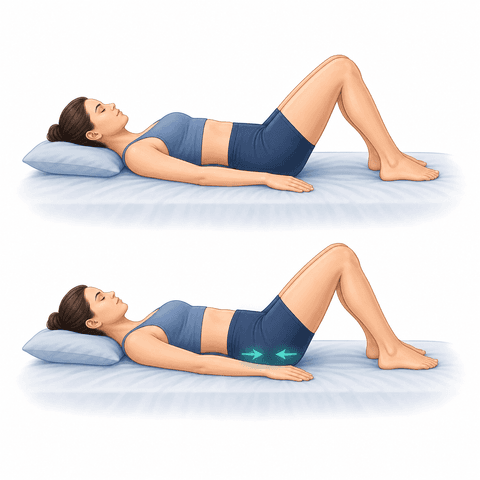
What it helps: Wakes up the glutes — the big muscles that steady and support your hip. Getting them firing again is the first step toward a hip that feels stronger and carries you with less strain on the joint.
How often: 2-3 sets of 10, a few times a day.
- Lie or sit comfortably.
- Squeeze your buttock muscles together.
- Hold a few seconds, then relax.
2. Clamshells
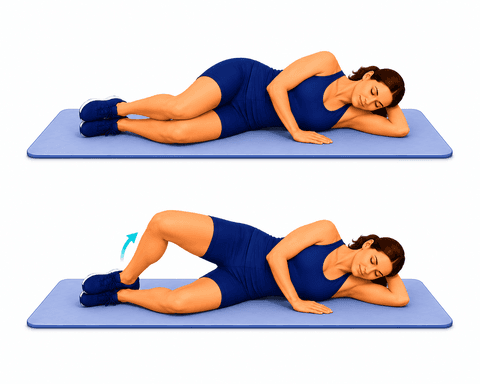
What it helps: Targets the muscles on the side of the hip that keep your pelvis level when you walk. Strong here, your hip tracks smoothly and shares load more evenly — steadier, more comfortable steps.
How often: 2 sets of 12–15 each side, daily.
- Lie on your side, knees bent and stacked.
- Keeping feet together and pelvis still, lift the top knee like a clamshell opening.
- Lower slowly.
Tip: Do not let your pelvis roll back.
3. Bridges
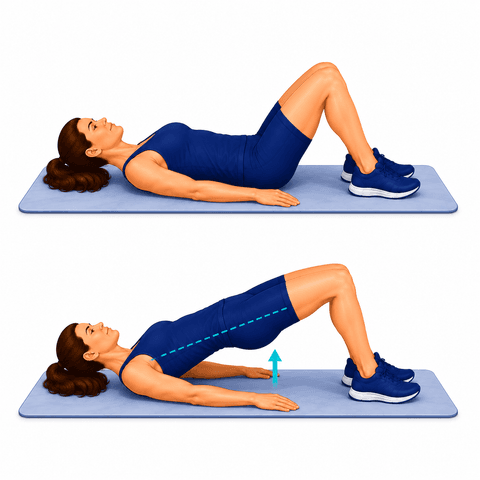
What it helps: Builds the glutes and core together, giving your hips and low back a strong, stable base to move from — so the muscles do the work instead of the joints.
How often: 2 sets of 10–15, daily.
- Lie on your back, knees bent, feet flat.
- Brace your core and squeeze your glutes to lift your hips into a straight line.
- Lower slowly with control.
Tip: Keep your stomach gently braced — do not arch your back.
4. Side-Lying Hip Abduction
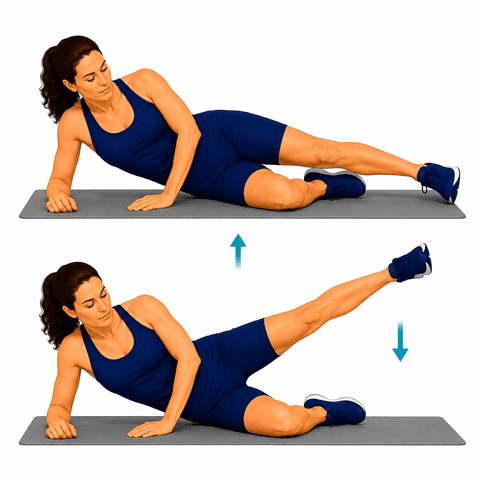
What it helps: Loads the side-hip muscles a step harder, building the strength that keeps your hip level and takes pressure off the joint on stairs and longer walks.
How often: 2-3 sets of 10-15, daily.
- Lie on your side with the bottom leg bent for support.
- Keep the top leg straight and raise it toward the ceiling.
- Hold briefly, then lower slowly.
Tip: Keep your toes pointing forward, not up.
5. Core Activation
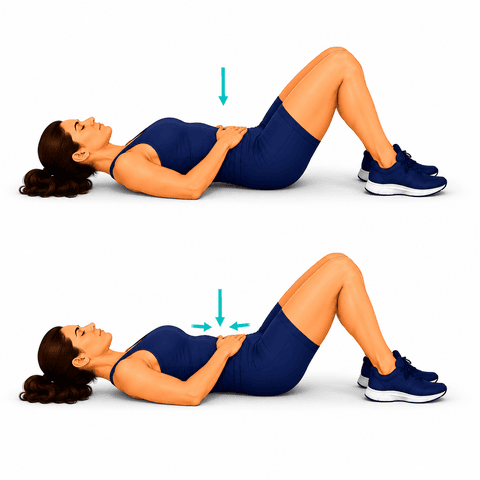
What it helps: Switches on the deep core muscles that stabilize your pelvis and spine, giving your hips a solid platform to move from.
How often: 2-3 sets of 10, daily.
- Lie or sit comfortably.
- Gently draw your belly button toward your spine.
- Hold a few seconds while breathing normally, then relax.
Tip: Avoid holding your breath.
6. Stationary Bike
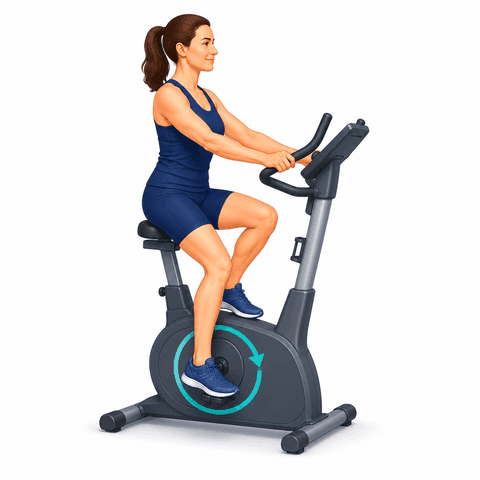
What it helps: Keeps the joints moving and nourished while you build endurance — all with no pounding. One of the gentlest ways to stay active when a joint is sore.
How often: directed.
- Set the seat so pedaling is comfortable.
- Pedal at an easy pace.
- Increase your time gradually.
7. Walking Program
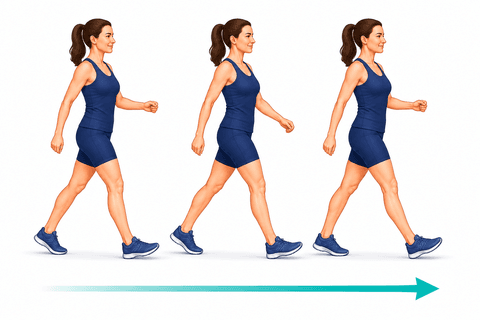
What it helps: Comfortable, frequent walking keeps the joints loose, builds your stamina, and rebuilds confidence on your feet. Little and often beats long and tiring.
How often: throughout the day.
- Take short walks at a comfortable pace.
- Increase your distance gradually as you feel able.
Tip: Use your assistive device as directed.
8. Standing Hip Abduction
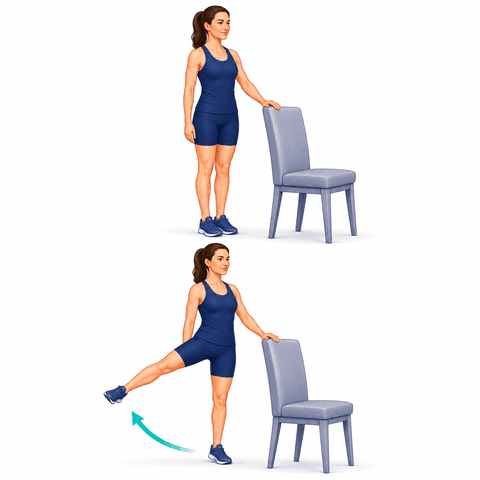
What it helps: Strengthens the outer-hip muscles that hold you steady whenever you're on one leg — which is every step you take. Stronger here, steadier hip.
How often: 2-3 sets of 10-15, 1-2x daily.
- Stand holding a counter for support.
- Lift your leg out to the side, keeping it straight.
- Lower slowly.
Tip: Keep your toes pointing forward.
See the complete 32-exercise program, phase by phase.
About Hip Impingement (FAI)
What the condition is, how it's usually managed, and what to expect — read the Hip Impingement (FAI) guide.
Recovery reading
Browse all exercise guides · Condition guides · Recovery education library
Are you a clinician? See how orthopedic practices use JointBooklet.
Are you a clinician? See how orthopedic practices use JointBooklet.
These are general exercise guides, not a personal prescription. The repetitions and frequency shown are what's commonly used — your own surgeon or therapist may advise something different, and their guidance comes first.