JointBooklet · jointbooklet.com
Carpal Tunnel Release (Endoscopic) Starter Exercise Guide
A short starting program — 8 exercises drawn from the full 28-exercise program. These are the movements most people begin with.
Before you begin. This is general guidance, not a personal prescription. If your surgeon or therapist has given you a different program or different limits, follow theirs.
1. Hand & Wrist Elevation and Swelling Control
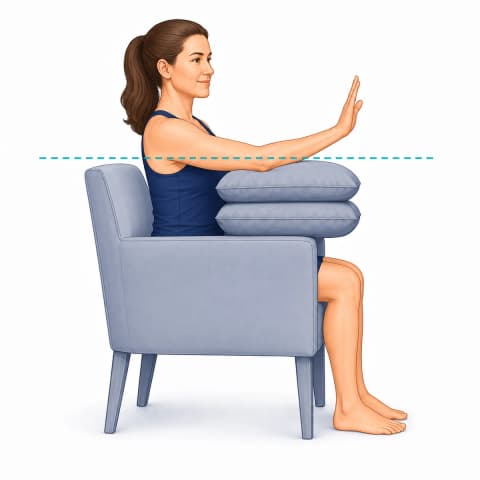
What it helps: Controls the swelling that is the main cause of stiffness after hand and wrist surgery. A swollen hand cannot make a full fist, and fingers left stiff in the first weeks are much harder to free later than the wrist itself is.
How often: every hour while awake sets of 10 slow fists, daily.
- Rest the hand higher than your heart. Sitting, prop the whole forearm on a stack of cushions so the hand sits above chest level.
- Standing, rest it on the opposite shoulder; lying down, support the whole forearm on pillows.
- With the hand up, slowly make a loose fist and open it fully, spreading the fingers.
- Repeat the slow fist-and-open several times, then let the hand rest in the raised position.
- Come back to it regularly through the day rather than doing one long session.
Tip: Above the heart is the part that matters. A hand resting on your lap or in a sling at waist height is not elevated, and this is the commonest reason swelling does not settle.
2. Median Nerve Glides
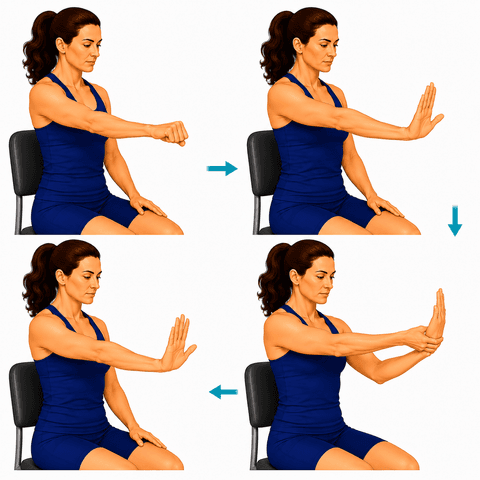
What it helps: Keeps the median nerve gliding smoothly through the carpal tunnel — easing the irritation behind carpal tunnel tingling without over-stretching a sensitive nerve.
How often: 2–3 sets of 5–10, daily.
- Start with a gentle fist, wrist neutral.
- Open the fingers straight, then bend the wrist back so the palm faces forward and fingers point up.
- Gently add a thumb stretch with the other hand if comfortable, then return. Move slowly through the sequence.
Tip: Gentle gliding — never a hard stretch, which can irritate a sensitive nerve.
3. Finger Range of Motion
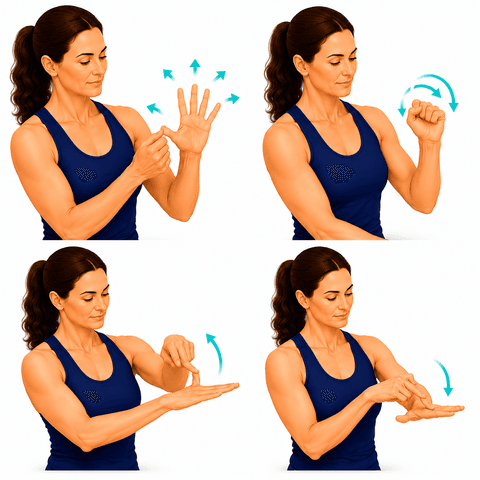
What it helps: Keeps the finger joints moving through their full range — preserving the bend and straighten you need to grip, pinch, and use your hands for everything.
How often: 2–3 sets of 10, daily (several times).
- Open the hand wide, fingers straight.
- Make a full fist, then open again.
- Bend each finger one at a time toward the palm, then straighten.
Tip: Smooth, comfortable motion through the whole range.
4. Tendon Gliding (Finger Glides)
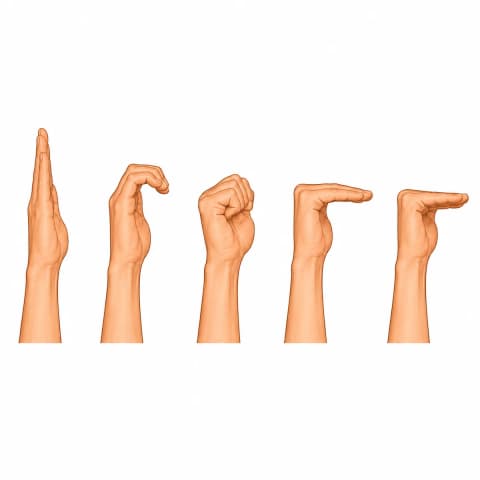
What it helps: Keeps the finger tendons sliding freely through their sheaths and the carpal tunnel — preventing stiffness and catching, and keeping the hand smooth and supple.
How often: 2–3 sets of 5–10 of each, daily.
- Start with fingers straight.
- Bend just the top two knuckles into a "hook," then straighten.
- Make a full fist, then straighten.
- Bend the big knuckles only into a "tabletop," then straighten.
- Make a "straight fist" (fingers curled but knuckles flat). Move slowly through each.
Tip: Move smoothly through the whole sequence.
5. Thumb Range of Motion

What it helps: Keeps the thumb's wide range — reaching, pinching, and opposing to the fingers — which is behind nearly every grip and pinch task the hand does.
How often: 2–3 sets of 8–10 each, daily.
- Move the thumb out away from the palm, then back.
- Touch the thumb tip to each fingertip in turn (opposition).
- Make gentle circles with the thumb. Keep it comfortable.
Tip: Smooth, pain-free motion.
6. Elbow Range of Motion
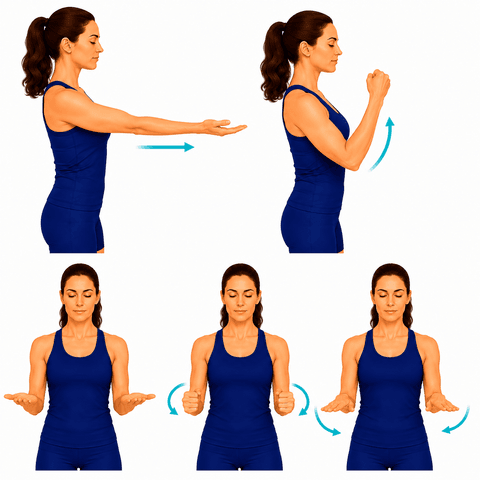
What it helps: Keeps the elbow and forearm moving through their full range — preserving the bend, straighten, and rotation you use for everyday tasks.
How often: 2–3 sets of 10 each, daily.
- Bend the elbow to bring your hand toward your shoulder, then slowly straighten it all the way.
- With the elbow tucked at your side and bent 90°, turn your palm up, then down.
- Move smoothly through comfortable range; don't force the ends.
Tip: Keep the upper arm still — the movement is at the elbow and forearm.
7. Walking Program
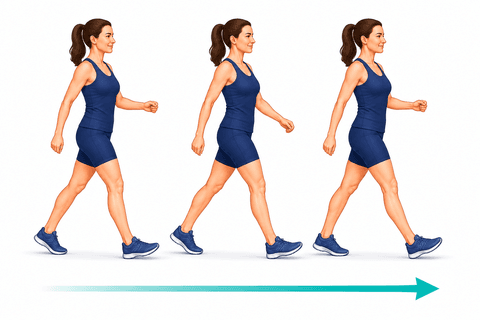
What it helps: Comfortable, frequent walking keeps the joints loose, builds your stamina, and rebuilds confidence on your feet. Little and often beats long and tiring.
How often: throughout the day.
- Take short walks at a comfortable pace.
- Increase your distance gradually as you feel able.
Tip: Use your assistive device as directed.
8. Scar Massage & Desensitisation
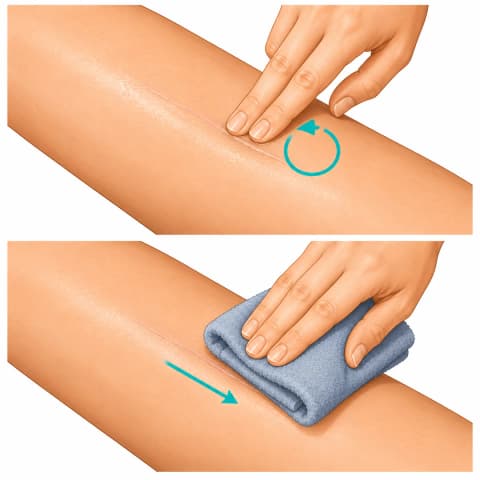
What it helps: Keeps the scar soft and mobile rather than tethered to the tissue underneath, and settles the hypersensitivity that makes a healed scar uncomfortable to knock or lean on. It is also what most helps the deep soreness in the heels of the palm after a carpal tunnel release.
How often: 2–3 sets of 3–5 minutes, daily.
- Wait until the wound is fully closed and any stitches are out — usually around two to three weeks. Check with your care team if unsure.
- Put a little unscented moisturiser or plain cream on the scar.
- Press firmly with a fingertip and move in small circles along and across the scar, firm enough to move the skin over the tissue beneath rather than sliding over the surface.
- Then rub different textures over the area — a towel, a soft cloth, clothing — for a minute or two, building from soft to coarser as it becomes tolerable.
Tip: Firm enough to move the skin is the point. Light stroking feels pleasant and does very little.
See the complete 28-exercise program, phase by phase.
What to expect in recovery
The full recovery guide for this procedure: Carpal Tunnel Release (Endoscopic) recovery.
Recovery reading
Browse all exercise guides · Condition guides · Recovery education library
Are you a clinician? See how orthopedic practices use JointBooklet.
Are you a clinician? See how orthopedic practices use JointBooklet.
These are general exercise guides, not a personal prescription. The repetitions and frequency shown are what's commonly used — your own surgeon or therapist may advise something different, and their guidance comes first.