Return to Recreational Activities
Easing back into the hobbies and activities you enjoy.
What it helps
Easing back into the sports and activities you love, at a pace your body is ready for — the reward for the strength you've built.
How to do it
- Reintroduce low-impact activities you enjoy, as cleared by your surgeon.
- Gardening, walking, swimming and gentle cycling are good places to start.
- Start with shorter sessions and build duration and intensity gradually.
- Listen to your body and progress steadily.
Tips
- Ramp up gradually — avoid sudden big efforts.
- A flare after activity means ease back, not stop entirely.
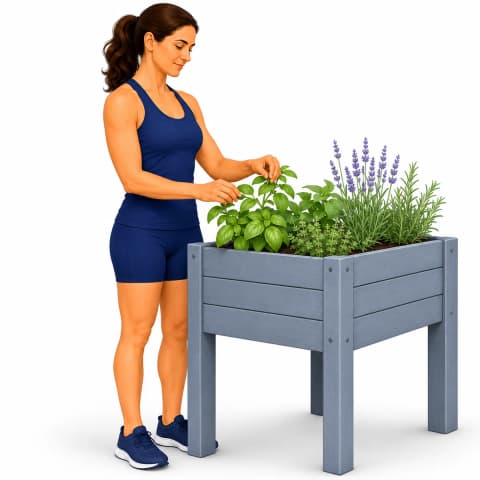
- Working at waist height — a raised bed, a bench, a table — takes a lot of bending out of a hobby.
Commonly done as tolerated.
Where this appears in recovery
Return to Recreational Activities is part of 34 recovery programs, most often at the long-term recovery (months 6–12), return to full activity (months 8–14) and settling (weeks 6–26) stages, among others. Each program shows how it fits alongside the other movements:
- Tarsal Tunnel Release exercise guide
- Distal Fibula Fracture ORIF exercise guide
- Achilles Tendon Lengthening exercise guide
- Lapidus Bunionectomy exercise guide
- Cheilectomy (Big Toe) exercise guide
- First MTP Fusion (Hallux Rigidus) exercise guide
- Anterior Cervical Discectomy and Fusion (ACDF) exercise guide
- Lumbar Microdiscectomy exercise guide
- Ankle ORIF (Trimalleolar) exercise guide
- Achilles Tendon Reconstruction exercise guide
- Bunionectomy (Double Osteotomy) exercise guide
- Triple Arthrodesis exercise guide
- …and 22 more
All exercise guides · Condition guides · Recovery education
These are general exercise guides, not a personal prescription. The repetitions and frequency shown are what's commonly used — your own surgeon or therapist may advise something different, and their guidance comes first.