Gouty Arthropathy (Knee) Exercise Guide

A phase-by-phase exercise program used in recovery for gouty arthropathy (knee). Each movement includes what it's working on and how it's typically performed. Your own surgeon's or therapist's guidance always comes first.

Phase 1

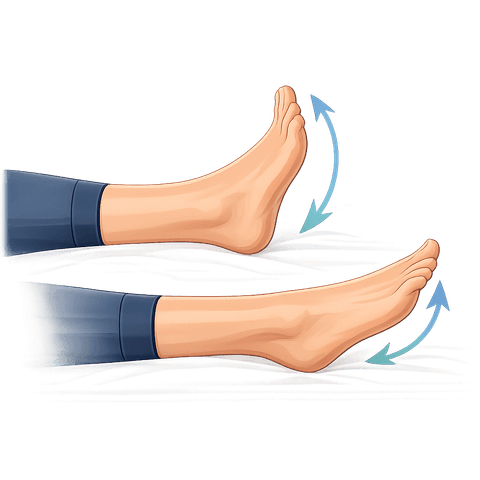
Ankle Pumps

Ankle Pumps exercise illustration

Improves circulation and helps reduce swelling.

What it helps: Keeps blood moving to reduce swelling and the risk of clots while you're less active — small, frequent, and important early on.

  1. Flex your foot up, pointing your toes toward the ceiling.
  2. Point your toes down, away from your body.

Tips:

  • Move slowly and with control.

Commonly done as 20 repetitions, several times a day.

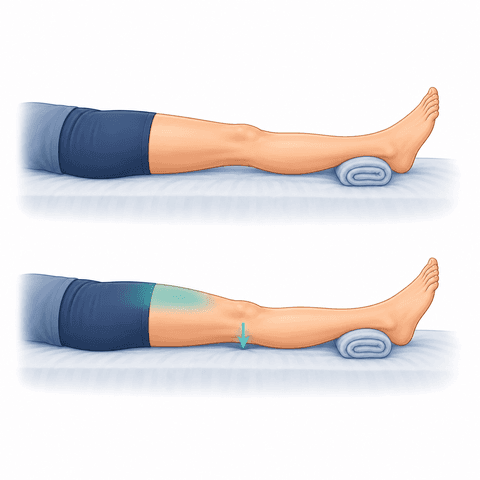
Quad Sets

Quad Sets exercise illustration

Re-activates the thigh muscle and supports knee control.

What it helps: Wakes up the quadriceps — the big thigh muscles that support and control your knee. Getting them firing is the foundation of a strong, steady leg.

  1. Sit or lie with your leg straight.
  2. Tighten the muscle on top of your thigh, pressing the back of your knee down.
  3. Hold briefly, then relax.

Commonly done as 2-3 sets of 10, a few times a day.

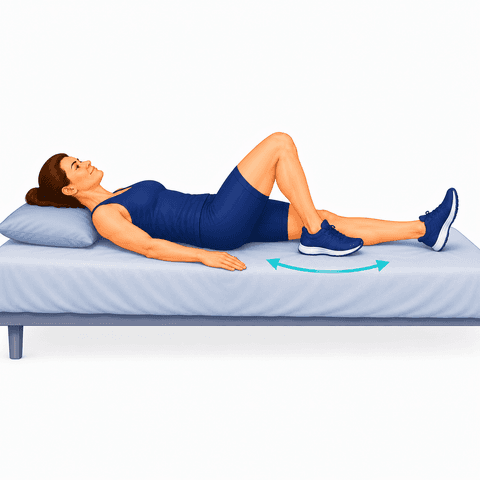
Heel Slides

Heel Slides exercise illustration

Encourages early, gentle knee motion.

What it helps: Coaxes gentle bending back into the knee — restoring the motion you need for stairs, sitting, and getting in and out of a car.

  1. Lie on your back with your legs straight.
  2. Slowly slide your heel toward you, bending the knee.
  3. Slide it back down.

Tips:

  • Only go as far as is comfortable.

Commonly done as 2-3 sets of 10, a few times a day.

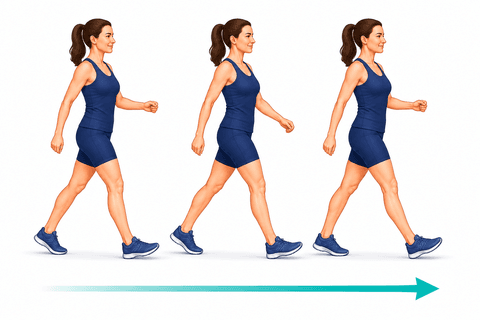
Walking Program

Walking Program exercise illustration

Short, frequent walks build endurance and confidence.

What it helps: Comfortable, frequent walking keeps the joints loose, builds your stamina, and rebuilds confidence on your feet. Little and often beats long and tiring.

  1. Take short walks at a comfortable pace.
  2. Increase your distance gradually as you feel able.

Tips:

  • Use your assistive device as directed.

Commonly done throughout the day.

Phase 2

Heel Slides

Heel Slides exercise illustration

Encourages early, gentle knee motion.

What it helps: Coaxes gentle bending back into the knee — restoring the motion you need for stairs, sitting, and getting in and out of a car.

  1. Lie on your back with your legs straight.
  2. Slowly slide your heel toward you, bending the knee.
  3. Slide it back down.

Tips:

  • Only go as far as is comfortable.

Commonly done as 2-3 sets of 10, a few times a day.

Quad Sets

Quad Sets exercise illustration

Re-activates the thigh muscle and supports knee control.

What it helps: Wakes up the quadriceps — the big thigh muscles that support and control your knee. Getting them firing is the foundation of a strong, steady leg.

  1. Sit or lie with your leg straight.
  2. Tighten the muscle on top of your thigh, pressing the back of your knee down.
  3. Hold briefly, then relax.

Commonly done as 2-3 sets of 10, a few times a day.

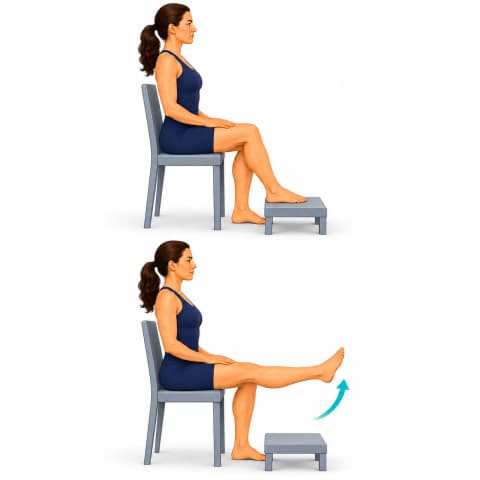
Seated Knee Extensions

Keeps the thigh strong while you stay off the foot.

What it helps: Keeps the thigh strong and the knee straightening well while you stay off your feet.

  1. Sit in a chair with your foot supported.
  2. Straighten your knee, lifting the lower leg.
  3. Lower slowly.

Tips:

  • Keep the movement at the knee, not the ankle.

Commonly done as 2-3 sets of 10, once or twice a day.

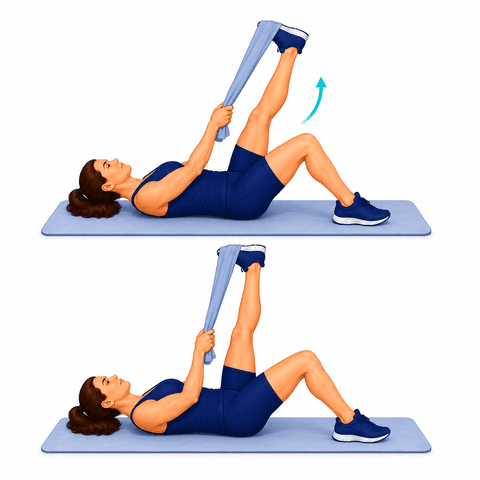
Hamstring Stretching

Hamstring Stretching exercise illustration

Eases tightness behind the thigh that can pull on the low back.

What it helps: Keeps the back of the thigh flexible so the knee and hip move freely and your stride stays easy.

  1. Lie on your back and loop a towel around one foot.
  2. Gently straighten the knee toward the ceiling until you feel a light stretch.
  3. Hold, then relax.

Tips:

  • Stretch to mild tension, not pain.
  • Breathe and ease into it.

Commonly done as hold 20–30s sets of 2–3 reps, 1–2 times a day.

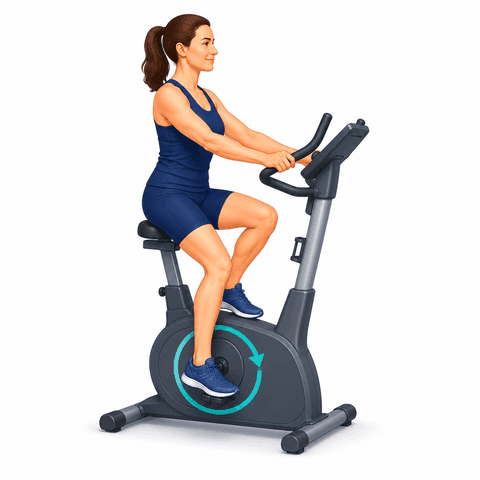
Stationary Bike

Stationary Bike exercise illustration

Builds motion and endurance with low impact.

What it helps: Keeps the joints moving and nourished while you build endurance — all with no pounding. One of the gentlest ways to stay active when a joint is sore.

  1. Set the seat so pedaling is comfortable.
  2. Pedal at an easy pace.
  3. Increase your time gradually.

Commonly done as directed.

Walking Program

Walking Program exercise illustration

Short, frequent walks build endurance and confidence.

What it helps: Comfortable, frequent walking keeps the joints loose, builds your stamina, and rebuilds confidence on your feet. Little and often beats long and tiring.

  1. Take short walks at a comfortable pace.
  2. Increase your distance gradually as you feel able.

Tips:

  • Use your assistive device as directed.

Commonly done throughout the day.

Phase 3

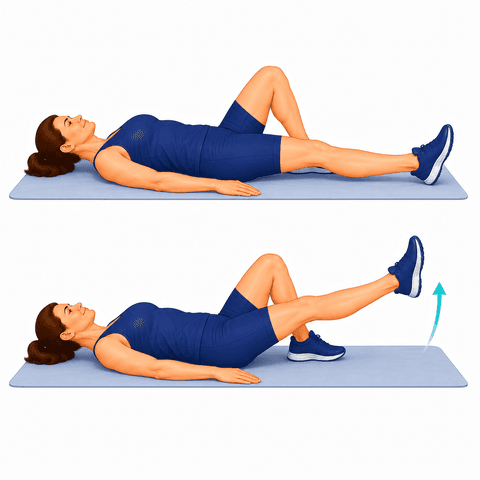
Straight Leg Raises

Straight Leg Raises exercise illustration

Strengthens the thigh while protecting the joint.

What it helps: Builds quad and hip strength while the knee stays straight, so the muscle works hard without stressing the joint.

  1. Lie down with one leg bent and the other straight.
  2. Tighten your thigh and lift the straight leg a few inches.
  3. Lower slowly.

Tips:

  • Keep the knee straight as you lift.

Commonly done as 2-3 sets of 10, once or twice a day.

Mini Squats

Mini Squats exercise illustration

Builds leg strength through a comfortable range.

What it helps: Builds hip and leg strength through a comfortable range, so everyday moves — sitting, standing, bending — take less out of your joints.

  1. Stand holding a counter.
  2. Bend your knees a small amount, keeping them behind your toes.
  3. Return to standing.

Commonly done as 2-3 sets of 10, once or twice a day.

Terminal Knee Extensions

Terminal Knee Extensions exercise illustration

Strengthens the muscles that straighten the knee.

What it helps: Trains the quad to lock the knee out fully straight — the strength you rely on every time you stand and step.

  1. Loop a band behind your knee.
  2. Straighten the knee against the band.
  3. Return slowly.

Commonly done as 2-3 sets of 10-15, once or twice a day.

Standing Hip Abduction

Standing Hip Abduction exercise illustration

Strengthens the muscles on the side of the hip.

What it helps: Strengthens the outer-hip muscles that hold you steady whenever you're on one leg — which is every step you take. Stronger here, steadier hip.

  1. Stand holding a counter for support.
  2. Lift your leg out to the side, keeping it straight.
  3. Lower slowly.

Tips:

  • Keep your toes pointing forward.

Commonly done as 2-3 sets of 10-15, 1-2x daily.

Stationary Bike

Stationary Bike exercise illustration

Builds motion and endurance with low impact.

What it helps: Keeps the joints moving and nourished while you build endurance — all with no pounding. One of the gentlest ways to stay active when a joint is sore.

  1. Set the seat so pedaling is comfortable.
  2. Pedal at an easy pace.
  3. Increase your time gradually.

Commonly done as directed.

Standing Quadriceps Stretch

Standing Quadriceps Stretch exercise illustration

Loosens the front-thigh muscles that pull on the kneecap.

What it helps: Loosens the front-thigh muscles so the knee bends comfortably and moves through its full range.

  1. Stand tall, holding a wall or chair for balance.
  2. Bend one knee and bring your heel toward your buttock.
  3. Grasp your ankle and gently pull until you feel a stretch in the front of your thigh.
  4. Hold, then switch sides.

Tips:

  • Keep your knees close together and stand tall — don't arch your back.
  • A gentle stretch, never forced.

Commonly done as hold 20–30s sets of 3 each side, daily.

Phase 4

Step-Ups

Step-Ups exercise illustration

Builds strength for stairs and daily activity.

What it helps: Builds the leg and hip strength — and the control — for stairs, curbs, and everyday activity.

  1. Step up onto a low step with your operative leg.
  2. Step back down with control.

Tips:

  • Hold a rail for balance.

Commonly done as 2-3 sets of 10, once or twice a day.

Leg Press

Leg Press exercise illustration

Builds leg strength with adjustable resistance.

What it helps: Builds solid leg and hip strength with resistance you can dial precisely to your comfort.

  1. Start with light resistance.
  2. Press through your whole foot.
  3. Return slowly.

Commonly done as 2-3 sets of 10-15, a few times a week.

Single-Leg Balance

Single-Leg Balance exercise illustration

Improves balance and stability.

What it helps: Trains your hip and leg to stay steady when all your weight is on one side — which is most of walking. Better balance means a surer, more confident step.

  1. Stand near a counter for safety.
  2. Lift one foot and balance on the other leg.
  3. Hold as able.

Commonly done daily.

Resistance Band Strengthening

Resistance Band Strengthening exercise illustration

Adds gentle resistance to build strength.

What it helps: Adds gentle, adjustable resistance to build strength steadily as you recover.

  1. Use a band for hip or leg exercises as directed.
  2. Move slowly through the range.

Commonly done a few times a week.

Cycling

Cycling exercise illustration

Low-impact endurance and motion.

What it helps: Low-impact endurance that keeps the joints moving smoothly while you build fitness — easy on the body, good for the long run.

Commonly done as able.

Walking Program

Walking Program exercise illustration

Short, frequent walks build endurance and confidence.

What it helps: Comfortable, frequent walking keeps the joints loose, builds your stamina, and rebuilds confidence on your feet. Little and often beats long and tiring.

  1. Take short walks at a comfortable pace.
  2. Increase your distance gradually as you feel able.

Tips:

  • Use your assistive device as directed.

Commonly done throughout the day.

Phase 5

Walking Program

Walking Program exercise illustration

Short, frequent walks build endurance and confidence.

What it helps: Comfortable, frequent walking keeps the joints loose, builds your stamina, and rebuilds confidence on your feet. Little and often beats long and tiring.

  1. Take short walks at a comfortable pace.
  2. Increase your distance gradually as you feel able.

Tips:

  • Use your assistive device as directed.

Commonly done throughout the day.

Cycling

Cycling exercise illustration

Low-impact endurance and motion.

What it helps: Low-impact endurance that keeps the joints moving smoothly while you build fitness — easy on the body, good for the long run.

Commonly done as able.

Progressive Strengthening

Progressive Strengthening exercise illustration

Gradually increases strength as you recover.

What it helps: Gradually raises the challenge as you get stronger, so your body keeps adapting and improving rather than plateauing.

Commonly done as directed.

Mini Squats

Mini Squats exercise illustration

Builds leg strength through a comfortable range.

What it helps: Builds hip and leg strength through a comfortable range, so everyday moves — sitting, standing, bending — take less out of your joints.

  1. Stand holding a counter.
  2. Bend your knees a small amount, keeping them behind your toes.
  3. Return to standing.

Commonly done as 2-3 sets of 10, once or twice a day.

Standing Quadriceps Stretch

Standing Quadriceps Stretch exercise illustration

Loosens the front-thigh muscles that pull on the kneecap.

What it helps: Loosens the front-thigh muscles so the knee bends comfortably and moves through its full range.

  1. Stand tall, holding a wall or chair for balance.
  2. Bend one knee and bring your heel toward your buttock.
  3. Grasp your ankle and gently pull until you feel a stretch in the front of your thigh.
  4. Hold, then switch sides.

Tips:

  • Keep your knees close together and stand tall — don't arch your back.
  • A gentle stretch, never forced.

Commonly done as hold 20–30s sets of 3 each side, daily.

Low-Impact Recreational Activities

Low-Impact Recreational Activities exercise illustration

Enjoyable activities that protect your joint.

What it helps: Getting back to the activities you enjoy in ways that are kind to your joints — the whole point of building this strength.

Commonly done as you like.

About Gouty Arthropathy (Knee)

What the condition is, how it's usually managed, and what to expect — read the Gouty Arthropathy (Knee) guide.

Recovery reading

Browse all exercise guides · Condition guides · Recovery education library

These are general exercise guides, not a personal prescription. The repetitions and frequency shown are what's commonly used — your own surgeon or therapist may advise something different, and their guidance comes first.