JointBooklet · jointbooklet.com
Bunion (Hallux Valgus) Starter Exercise Guide
A short starting program — 8 exercises drawn from the full 25-exercise program. These are the movements most people begin with.
Before you begin. This is general guidance, not a personal prescription. If your surgeon or therapist has given you a different program or different limits, follow theirs.
1. Big Toe Stretch & Mobility
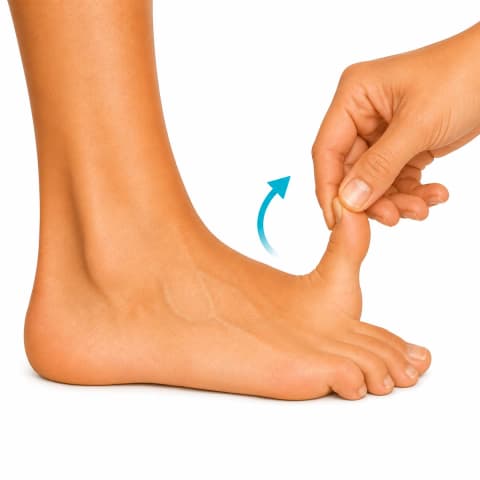
What it helps: Keeps the big-toe joint moving — the joint you push off through with every step — so walking stays smooth and comfortable.
How often: 2–3 sets of 10 / hold 15–20 sec, daily.
- Sit and cross the affected foot over the other knee. Gently bend the big toe up (toward the shin), then down.
- Hold a gentle stretch at each end.
- You can also press the big toe gently against the floor and lift, working the joint.
Tip: Gentle motion and stretch — don't force a stiff joint.
2. Toe Spreading Exercises
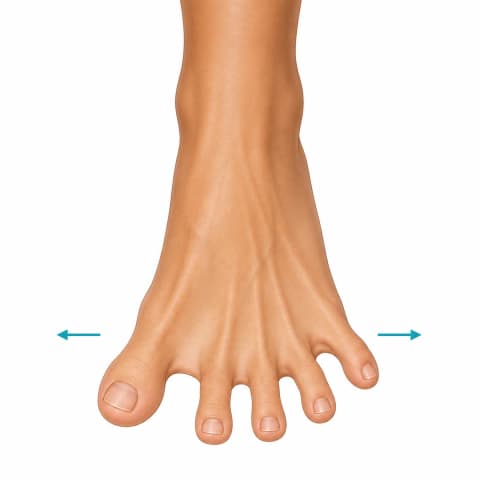
What it helps: Gently activates and separates the toes, restoring control of the small foot muscles.
How often: 2 sets of 10, daily.
- Seated with your foot flat, try to spread your toes apart.
- Hold briefly, then relax.
- A small foam toe-spacer between the toes can help guide the movement.
Tip: Numbness in the web space is expected after this surgery — move within comfort.
3. Toe Range of Motion
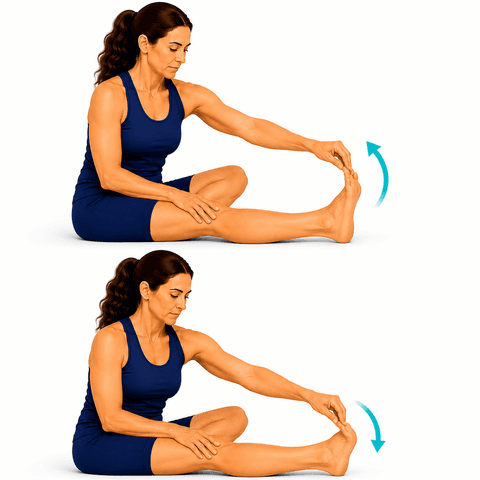
What it helps: Gently restores motion in the toes so they stay supple and mobile.
How often: 2-3 sets of 10, as directed.
- Seated, gently bend and straighten the toes, using your hand to assist if needed.
- Hold each position briefly.
- Stay within a comfortable, pain-free range.
Tip: Keep the movement gentle, within a comfortable, pain-free range.
4. Calf Stretch
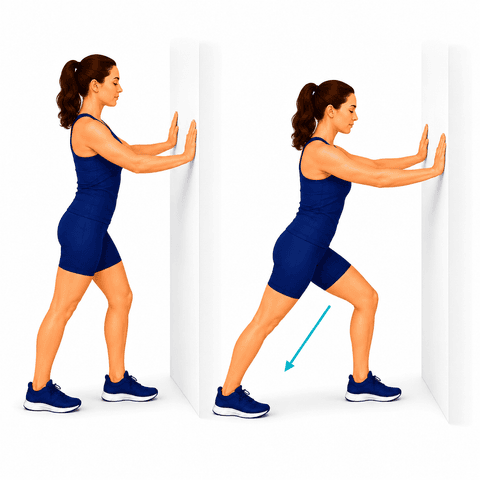
What it helps: Keeps the calf and Achilles supple, easing tension through the ankle and the arch of the foot.
How often: 3 sets of 20–30 sec hold, daily.
- Stand facing a wall, hands on the wall, surgical leg back.
- Keep the back knee straight and heel down, and lean forward until you feel a stretch in the calf.
- Then bend the back knee slightly to stretch a little lower.
Tip: Keep the stretch gentle and steady — no bouncing.
5. Walking Program
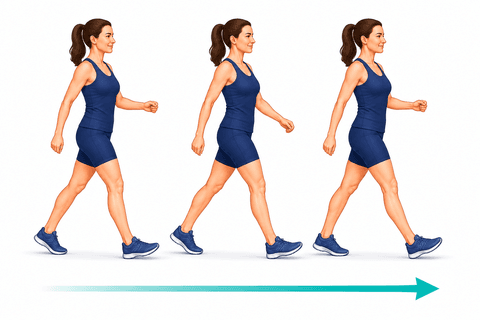
What it helps: Comfortable, frequent walking keeps the joints loose, builds your stamina, and rebuilds confidence on your feet. Little and often beats long and tiring.
How often: throughout the day.
- Take short walks at a comfortable pace.
- Increase your distance gradually as you feel able.
Tip: Use your assistive device as directed.
6. Big Toe Strengthening (Abduction)
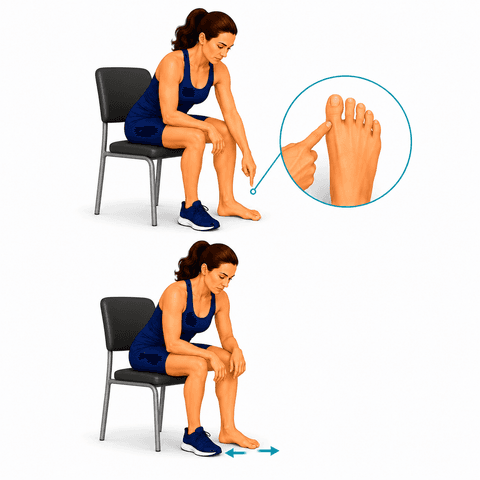
What it helps: Strengthens the muscle that pulls the big toe straight — supporting better big-toe alignment and a stable, balanced forefoot.
How often: 2 sets of 10–15, most days.
- Sit with the foot flat. Try to move the big toe away from the other toes (out toward the midline) without lifting or curling it.
- It's tricky at first — even a small movement counts. Hold, then relax.
- You can guide it gently with a finger at first.
Tip: A small, isolated movement — be patient learning it.
7. Short Foot (Arch Doming)
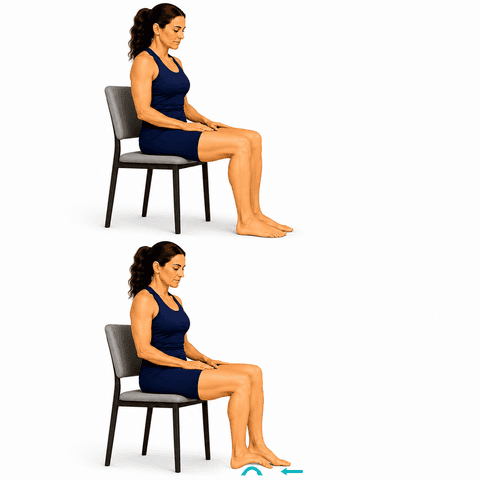
What it helps: Strengthens the small muscles inside the foot that support and lift the arch — the foundation of a stable, well-supported foot for standing and walking.
How often: 2–3 sets of Hold 5–10 sec ×8–10, daily.
- Sit or stand with the foot flat. Without curling your toes, gently draw the ball of the foot back toward the heel so the arch lifts and shortens.
- Hold the gentle arch lift, then relax.
- Keep the toes long and relaxed — the work is in the arch, not the toes.
Tip: It's a small, subtle movement — the arch domes up a little.
8. Heel Raises
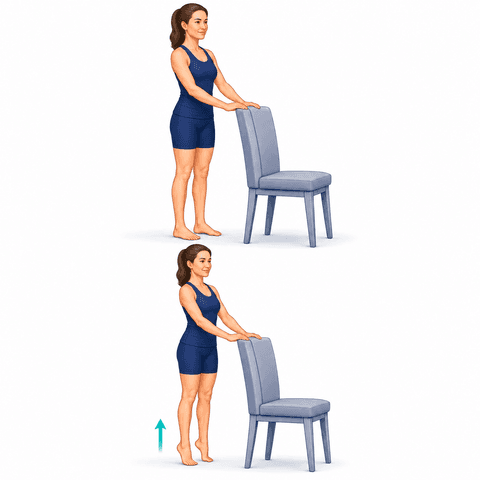
What it helps: Strengthens the calf and steadies your balance, rebuilding the push-off that drives walking.
How often: 2-3 sets of 10-15, once or twice a day.
- Stand holding a counter.
- Rise up onto your toes.
- Lower slowly.
See the complete 25-exercise program, phase by phase.
About Bunion (Hallux Valgus)
What the condition is, how it's usually managed, and what to expect — read the Bunion (Hallux Valgus) guide.
What recovery is like
The recovery arc for this procedure — what each stage generally involves. Read Bunion Surgery Recovery.
Recovery reading
Browse all exercise guides · Condition guides · Recovery education library
Are you a clinician? See how orthopedic practices use JointBooklet.
Are you a clinician? See how orthopedic practices use JointBooklet.
These are general exercise guides, not a personal prescription. The repetitions and frequency shown are what's commonly used — your own surgeon or therapist may advise something different, and their guidance comes first.